If you already have a VA loan and interest rates have dropped since you bought your home, there's a good chance you're leaving money on the table every single month. A VA Streamline Refinance officially called an IRRRL, or Interest Rate Reduction Refinance Loan lets you trade your current VA loan for a new one with a lower rate, often with less paperwork, no home appraisal, and no need to prove your income all over again.
I work with veterans and service members every week who are surprised at how simple this process can be compared to their original home purchase loan. There's no guesswork here; this guide walks through exactly how it works, what you need to qualify, and how much you might realistically save. And if any part of it feels confusing, that's exactly what a licensed VA loan officer is happy to run your specific numbers any time.
What Is a VA Streamline Refinance (IRRRL)?
A VA Streamline Refinance, or IRRRL, is a refinance option built exclusively for homeowners who already have a VA loan. Instead of applying for a brand-new type of loan, you're simply replacing your existing VA loan with a new one usually to get a lower interest rate or switch from an adjustable rate to a fixed one.
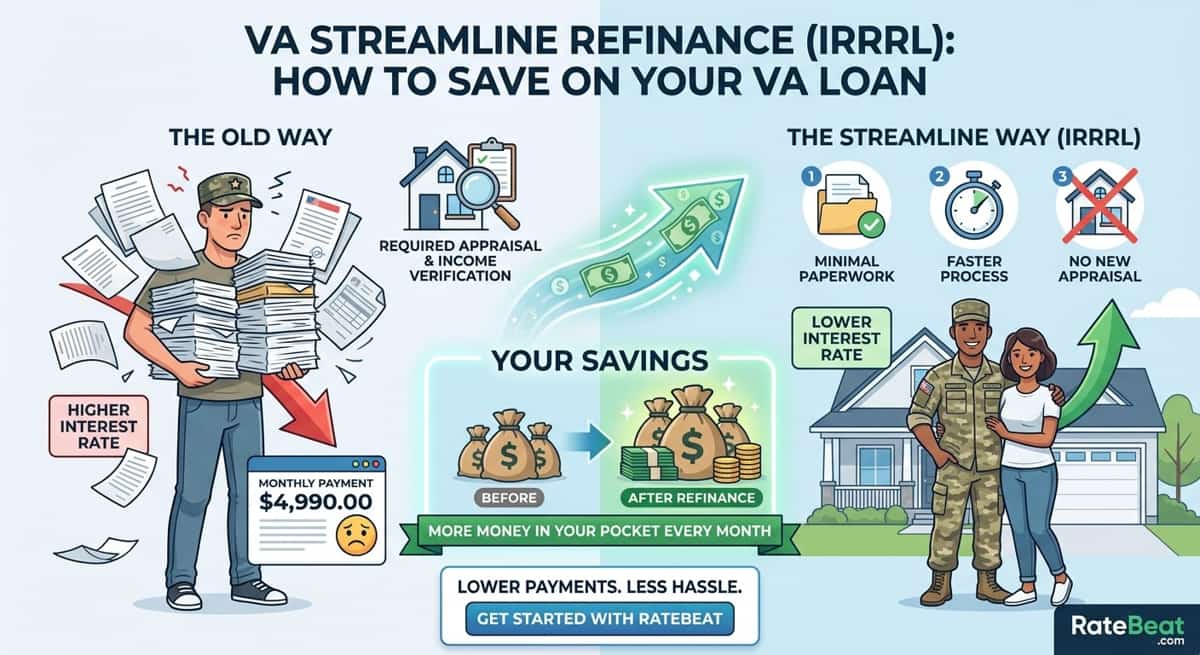
The word "streamline" isn't just marketing. This refinance was designed by the VA to be faster and easier than a typical refinance. In most cases, you won't need a new home appraisal, and you won't have to re-verify your income or job history the way you did the first time around.
It's different from a cash-out refinance loan, which lets you pull equity out of your home in cash. An IRRRL isn't about accessing cash, it's about lowering your rate and your monthly payment.
How Does a VA IRRRL Work?
At its core, an IRRRL replaces your current VA loan with a new VA loan, ideally one with better terms. The new loan pays off your existing mortgage, and going forward, you make payments on the new, lower-rate loan instead.
Here's what makes it stand out from a typical refinance:
No new appraisal. Because you already qualified for a VA loan on this home once, the VA doesn't require a fresh appraisal in most cases. That alone can save you time and a few hundred dollars.
No income or employment re-verification. Life changes, maybe you switched jobs, or your income looks different than it did when you first bought the home. With an IRRRL, that typically doesn't matter. The VA already knows you've been making payments responsibly.
Minimal documentation. You're not starting from scratch. Much of what's required focuses on your current loan, your payment history, and the new loan terms not rebuilding your entire financial picture.
What Makes It "Streamlined"?
Compare this to a standard refinance, where you'd typically need a new appraisal, updated pay stubs, tax returns, and a full underwriting review of your finances. The IRRRL skips most of that, which is why many borrowers can move from application to closing in a matter of weeks rather than months.
VA Streamline Refinance Eligibility Requirements
Not everyone qualifies for an IRRRL but if you already have a VA loan, you're most of the way there. Here's what typically needs to line up:
You must currently have a VA-backed loan. This program only refinances existing VA loans into new VA loans. If your current mortgage is FHA, conventional, or USDA, this specific refinance option isn't available to you.
You've lived in the home before. The VA requires that you've occupied the property as your primary residence at some point even if you're not living there right now. This is different from a purchase loan, where occupancy is required going forward.
You've met the seasoning requirement. The VA requires that at least 210 days have passed since your first payment on the current loan, and that you've made at least 6 consecutive monthly payments on time. This rule exists to prevent people from refinancing too soon after closing.
The refinance provides a "net tangible benefit." This is the VA's way of making sure the refinance actually helps you whether that's a lower interest rate, a move from an adjustable rate to a fixed one, or a lower monthly payment. Lenders are required to document how the new loan puts you in a better position.
Do You Need a New Certificate of Eligibility (COE)?
In most cases, no. Since you already used your VA loan entitlement to purchase the home, you generally don't need to pull a new Certificate of Eligibility to refinance it.
How a VA Streamline Refinance Helps You Save
This is the part most homeowners care about most where the actual savings come from.
A lower monthly payment. If rates have dropped since you got your original VA loan, refinancing into today's lower rate can reduce what you pay every month. Even a modest rate reduction can add up to real savings over the life of the loan.
Moving from an adjustable rate to a fixed rate. If your current loan has an adjustable rate, an IRRRL lets you lock into a fixed rate instead. That means no more wondering whether your payment will jump next year, your rate and payment stay predictable.
Less interest paid over time. A lower rate doesn't just help your monthly budget, it can meaningfully reduce the total interest you pay across the life of the loan, especially if you plan to stay in the home for several more years.
Savings from skipping the appraisal. Since most IRRRLs don't require a new appraisal, you avoid that cost entirely, typically a few hundred dollars you'd otherwise pay out of pocket.
Time savings from reduced documentation. Skipping the income and employment re-verification process means less paperwork for you and a faster path to closing.
Example Savings Scenario
Let's say you have a VA loan with a rate that's noticeably higher than today's rates. Refinancing into a lower rate could reduce your monthly payment by a meaningful amount. The exact figure depends entirely on your loan balance, your new rate, and your remaining term. This is just an illustration, not a promise your actual numbers will depend on your specific loan, and a licensed loan officer can run the real math for you in minutes.
VA Streamline Refinance Rates: What Affects Your Rate
VA IRRRL rates move daily along with the broader mortgage market, and they vary from lender to lender so there's no single "current rate" that applies to everyone.
A few things influence the rate you're offered:
Your credit profile. While IRRRLs are more flexible than many refinance types, your credit history can still affect your rate.
Overall market conditions. Rates shift with the broader economy, so timing matters.
The loan term you choose. A shorter term often comes with a different rate than a longer one.
The lender you work with. Pricing isn't identical across lenders this is one of the few places where shopping around genuinely pays off.
Because rates change so often, the most reliable way to know what you'd actually qualify for is to get a direct, personalized VA loan rate quote rather than relying on rates you see advertised online. .
VA Funding Fee and Closing Costs
Most VA IRRRLs come with a VA funding fee. You can review current VA funding fee requirements to see if you qualify for a disability exemption. The exact percentage can change over time, so it's always worth confirming the current rate directly through your lender or VA.gov rather than relying on an old number.
You may be exempt. If you receive VA disability compensation, you're often exempt from the funding fee altogether; this is worth checking before you assume it applies to you.
Typical closing costs on an IRRRL can include things like title fees, recording fees, and lender fees. Since there's usually no appraisal, you're already avoiding one common cost from a traditional refinance.
Rolling costs into the loan. Many borrowers choose to roll the funding fee and closing costs into the new loan balance rather than paying out of pocket at closing. This can mean little to no upfront cost though it does slightly increase your loan balance, so it's worth weighing both options.
Break-Even Point: How to Know If It's Worth It
A simple way to think about whether refinancing makes sense: divide your closing costs by your monthly savings. That tells you roughly how many months it takes to "break even." If you plan to stay in your home longer than that, the refinance is likely worth it.
VA Streamline Refinance vs. Cash-Out Refinance vs. Conventional Refinance
It helps to see how the IRRRL stacks up against other refinance options you might come across.
VA Streamline (IRRRL) | VA Cash-Out Refinance | Conventional Refinance | |
Who qualifies | Must already have a VA loan | Veterans/service members, VA loan not required | Most homeowners |
Appraisal required | Usually not | Yes | Yes |
Income re-verification | Usually not required | Required | Required |
Access to cash | No | Yes | Depends on loan type |
Best for | Lowering your rate/payment on an existing VA loan | Tapping home equity for cash | Homeowners without a VA loan, or those needing cash out |
If your goal is simply to lower your rate or move to a fixed payment, the IRRRL is usually the fastest and least expensive path. If you need to pull cash out of your home for renovations, debt consolidation, or other expenses, a VA cash-out refinance or conventional option might be a better fit just know those come with more documentation and typically require an appraisal.
How to Apply for a VA Streamline Refinance: Step-by-Step
Here's what the process generally looks like from start to finish:
1. Confirm you have an existing VA loan in good standing. Make sure your current loan is a VA loan and that you've made your payments on time, especially over the last six months.
2. Check your net tangible benefit. Make sure the refinance actually improves your situation: a lower rate, a fixed payment, or both.
3. Compare VA-approved lenders. Rates and fees vary, so it's worth getting quotes from more than one licensed loan officer before choosing.
4. Gather your (minimal) documentation. You'll typically need less than you did for your original purchase, often just basic loan and identity information.
5. Lock your rate. Once you've chosen a lender and terms you're comfortable with, you'll lock in your new rate.
6. Close on your new loan. Many borrowers are surprised at how quick and low-paperwork this step is compared to their original home purchase. In many cases, there's little to no cost due at closing.
The whole process is designed to move faster than a typical refinance for many borrowers, it's a matter of weeks rather than months.
Common VA Streamline Refinance Mistakes to Avoid
A few missteps I see fairly often:
Not checking the break-even timeline. If you're planning to sell or move soon, make sure the savings actually outweigh the closing costs before you commit.
Assuming every lender offers the same deal. Fees and rates can vary more than people expect. It's worth comparing at least two or three lenders.
Overlooking the net tangible benefit requirement. This isn't just a formality, it's the VA's way of making sure the refinance genuinely helps you, so make sure you understand exactly how it does.
Not checking funding fee exemption status. If you receive VA disability compensation, you could be skipping a fee entirely. Don't assume you owe it without checking first.
When Does a VA Streamline Refinance Make Sense?
An IRRRL tends to make the most sense when:
Interest rates have dropped meaningfully since you took out your current VA loan
You have an adjustable-rate loan and want the predictability of a fixed rate
You plan to stay in your home longer than your break-even point
When It Might NOT Make Sense
You're planning to sell or move in the very near future, before you'd recoup the closing costs
Your current rate is already close to today's rates, leaving little room for meaningful savings
You actually need to access cash from your home's equity in that case, a cash-out refinance may fit your goals better.
Talk to a Licensed VA Loan Officer
A VA Streamline Refinance can be one of the simplest ways to lower your monthly payment, gain rate stability, and save money over the life of your loan often with far less hassle than your original purchase loan required. That said, your actual savings depend entirely on your current rate, loan balance, and how long you plan to stay in your home.
The best next step is to contact a licensed RateBeat loan officer who can look at your specific numbers and tell you honestly whether refinancing makes sense right now. There's no obligation to move forward, just clarity on what you'd actually save.