Ratebeat Logo

Our Blog

Insights That Move You Forward

Read the latest expert advice and in-depth articles to stay informed and empowered on your path to homeownership.

What Credit Score Do You Need for a HELOC?
July 2, 2026
13 min read
HELOCCredit Score

What Credit Score Do You Need for a HELOC?

Lenders typically require a minimum credit score of 620 to qualify for a HELOC, though scores above 700 unlock the best interest rates. Beyond your credit score, lenders also heavily weigh your home equity, debt-to-income ratio, and income stability. Boosting your score before applying can significantly lower your long-term borrowing costs.

Monthly Payment Differences Between 15-Year and 30-Year Mortgages
July 1, 2026
11 min read
15-Year Fixed Rate Mortgage

Monthly Payment Differences Between 15-Year and 30-Year Mortgages

Choosing between a 15- and 30-year mortgage balances immediate cash flow against long-term savings. The 30-year term offers lower, manageable monthly payments. The 15-year term requires 40–60% higher payments but builds equity twice as fast, secures lower interest rates, and saves hundreds of thousands of dollars in lifetime interest.

What Is a 15-Year Fixed Rate Mortgage and How Does It Work?
June 30, 2026
11 min read
15-Year Fixed Rate MortgageMortgage

What Is a 15-Year Fixed Rate Mortgage and How Does It Work?

A 15-year fixed-rate mortgage trades higher monthly payments for a shorter payoff timeline, building home equity twice as fast as a 30-year loan. It offers lower interest rates and substantial long-term savings, making it ideal for stable budgets or pre-retirees looking to become debt-free sooner, provided they budget for higher monthly costs.

FHA Loan Limits Explained: How Much Can You Borrow?
June 29, 2026
16 min read
FHA

FHA Loan Limits Explained: How Much Can You Borrow?

Is an FHA Loan Worth It? Pros and Cons for Homebuyers
June 28, 2026
13 min read
FHA

Is an FHA Loan Worth It? Pros and Cons for Homebuyers

How Long Does It Take to Get a HELOC?
June 27, 2026
11 min read
HELOC

How Long Does It Take to Get a HELOC?

Getting a HELOC typically takes 2 to 6 weeks. While online lenders utilizing automated valuations can fund in 5 to 15 days, traditional banks often take 4 to 8 weeks. The total timeline depends heavily on the appraisal method, your credit profile, and how quickly you submit financial documentation.

What Is a Cash-Out Refinance and How Does It Work?
June 24, 2026
12 min read
Cash Out Refinance

What Is a Cash-Out Refinance and How Does It Work?

A cash-out refinance replaces your current mortgage with a larger one, giving you the difference in a lump sum of cash. Powered by your home equity, it is ideal for major goals like debt consolidation or renovations. However, it resets your loan term, carries closing costs, and uses your home as collateral.

Cash Out Refinance Vs Heloc 2026
June 23, 2026
17 min read
Cash Out RefinanceHELOC

Cash Out Refinance Vs Heloc 2026

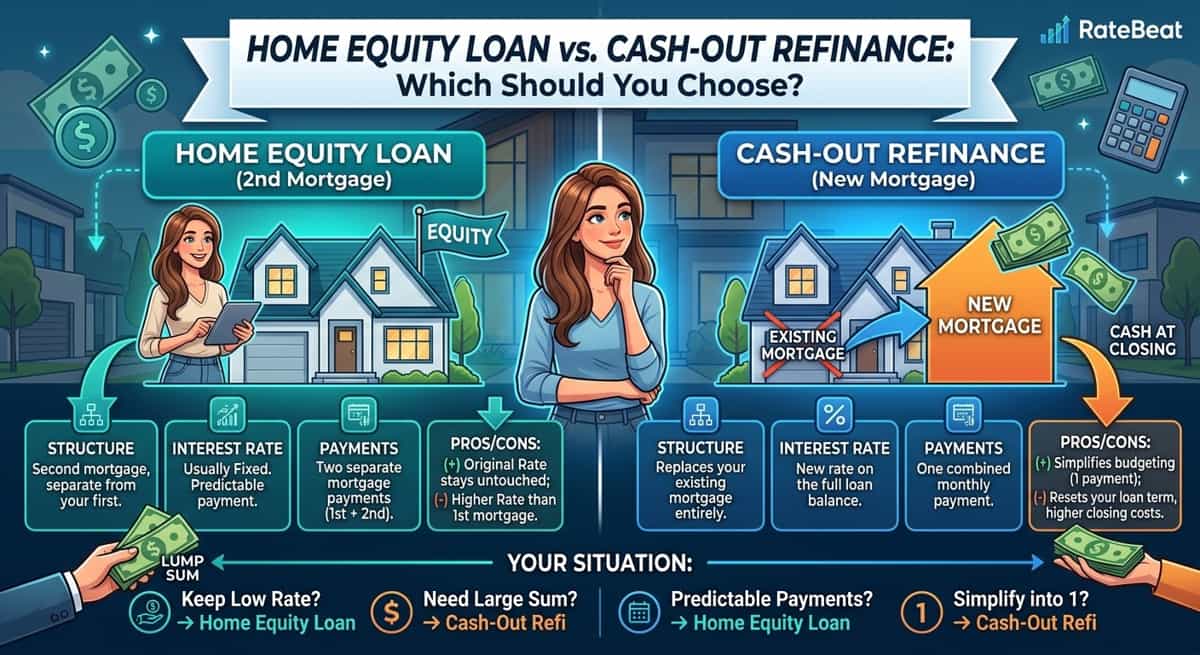
In 2026, choosing between a cash-out refinance and a HELOC depends on your current mortgage rate. A cash-out refinance replaces your mortgage with a new, fixed-rate lump sum, while a HELOC acts as a variable-rate second loan, preserving your existing low rate with lower upfront closing costs.

Mortgage Pre-Qualification Checklist: What to Prepare
June 21, 2026
14 min read
Mortgage

Mortgage Pre-Qualification Checklist: What to Prepare

Mortgage pre-qualification is a fast, low-stress financial health check that estimates your borrowing power without affecting your credit. To ensure a smooth process for purchasing, refinancing, or accessing home equity, organize five core items: proof of identity, income verification, asset statements, two years of employment history, and a debt overview.

Home Equity Loans vs. HELOCs: Which Is Right for You?
June 20, 2026
13 min read
Home EquityHELOC

Home Equity Loans vs. HELOCs: Which Is Right for You?

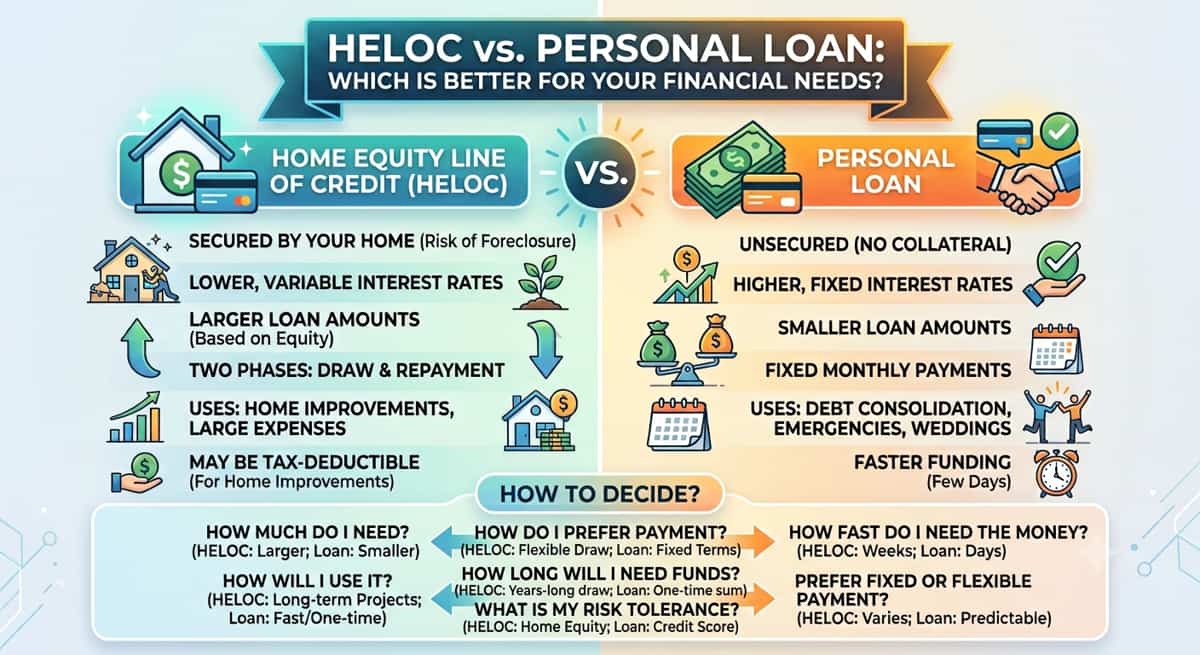
Homeowners sitting on elevated equity can choose between two primary tools: a fixed-rate home equity loan, which provides a lump sum with predictable monthly payments for defined, one-time expenses, or a variable-rate HELOC, which offers a flexible, credit-card-like line of credit ideal for ongoing or phased projects. Both use your home as collateral.

Is an Adjustable-Rate Mortgage Right for You?
June 18, 2026
17 min read
Adjustable Rate Mortgage#MortgageRate

Is an Adjustable-Rate Mortgage Right for You?

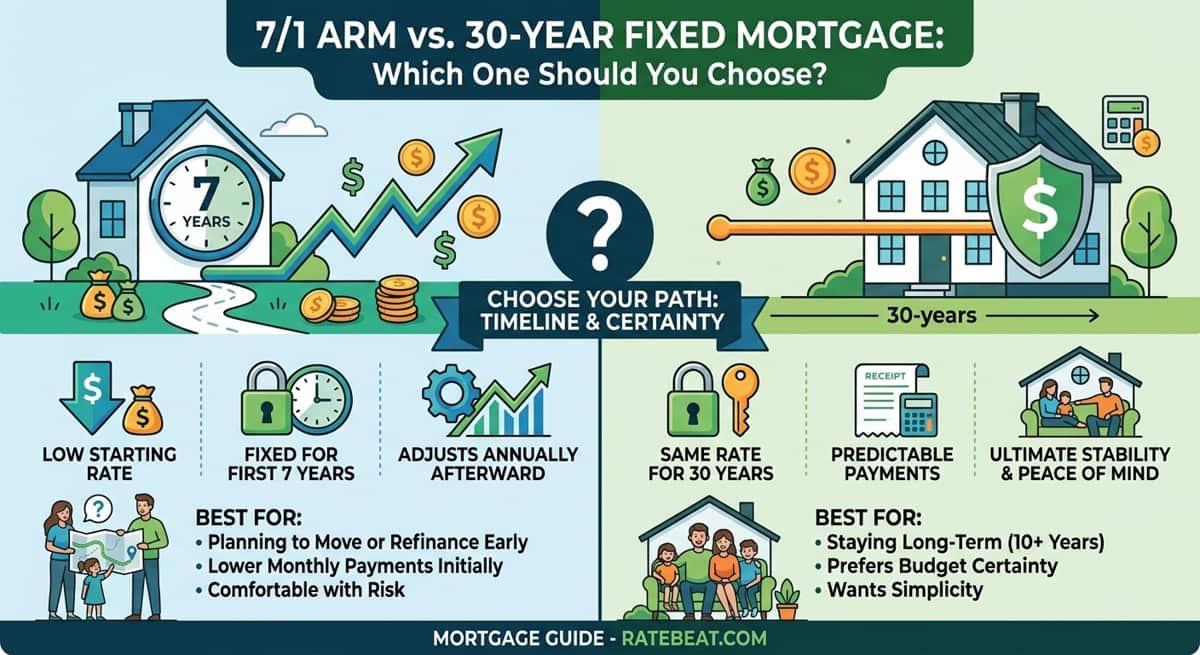
An adjustable-rate mortgage (ARM) offers lower initial rates and payments than a fixed-rate loan, making it ideal for short-term homeowners or strategic refinancers. However, ARMs carry risk due to future payment uncertainty. A fixed-rate mortgage is better for long-term stability, so your choice should match your timeline and budget.

Refinance vs Loan Modification: Which Should You Choose?
June 16, 2026
11 min read
Refinancingloan

Refinance vs Loan Modification: Which Should You Choose?

Choosing between mortgage refinancing and loan modification depends on your financial stability. Refinancing replaces your current mortgage with a new loan to secure better rates or terms, requiring good credit. Loan modification alters your existing loan terms to provide relief during financial hardship, helping you avoid foreclosure and stay in your home.

Debt-To-Income (DTI) Ratio: What’s Good And How To Calculate It
June 13, 2026
19 min read
Debt-To-Income

Debt-To-Income (DTI) Ratio: What’s Good And How To Calculate It

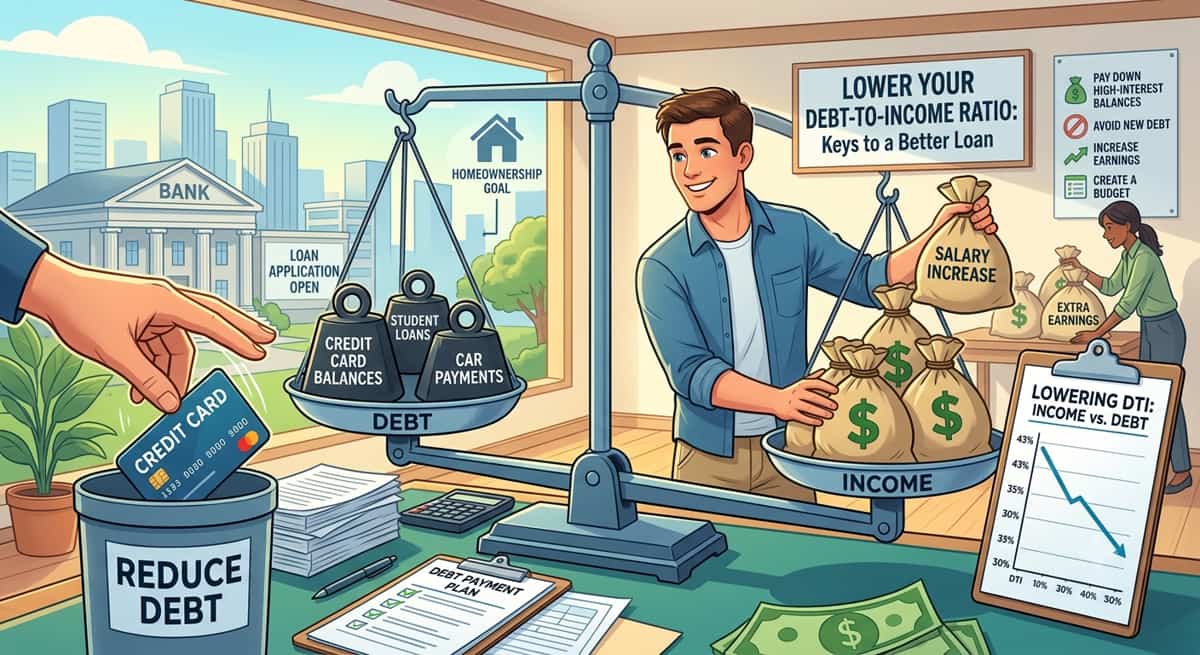
Debt-to-income (DTI) ratio measures the percentage of gross monthly income spent on debt payments. Lenders look at front-end (housing) and back-end (total debt) DTIs to evaluate borrowing risk. Aiming below 43%-or 36% for optimal rates improves mortgage or refinancing approval, and can be boosted by reducing revolving debt.

Is a HELOC Worth It? A Decision Framework
June 11, 2026
11 min read
HELOC

Is a HELOC Worth It? A Decision Framework

A Home Equity Line of Credit (HELOC) is a flexible, variable-rate tool best for phased projects or financial cushions. Because it uses your home as collateral, success depends on stable income, clear financial purposes, and a budget that can absorb rising interest rates without sacrificing your low primary mortgage rate.

Jumbo Loan Requirements in 2026: Everything Homebuyers Need to Know
June 10, 2026
25 min read
LoanJumbo Loan

Jumbo Loan Requirements in 2026: Everything Homebuyers Need to Know

Adjustable Rate Mortgage Explained: Everything You Need to Know
June 8, 2026
18 min read
Adjustable Rate Mortgage

Adjustable Rate Mortgage Explained: Everything You Need to Know

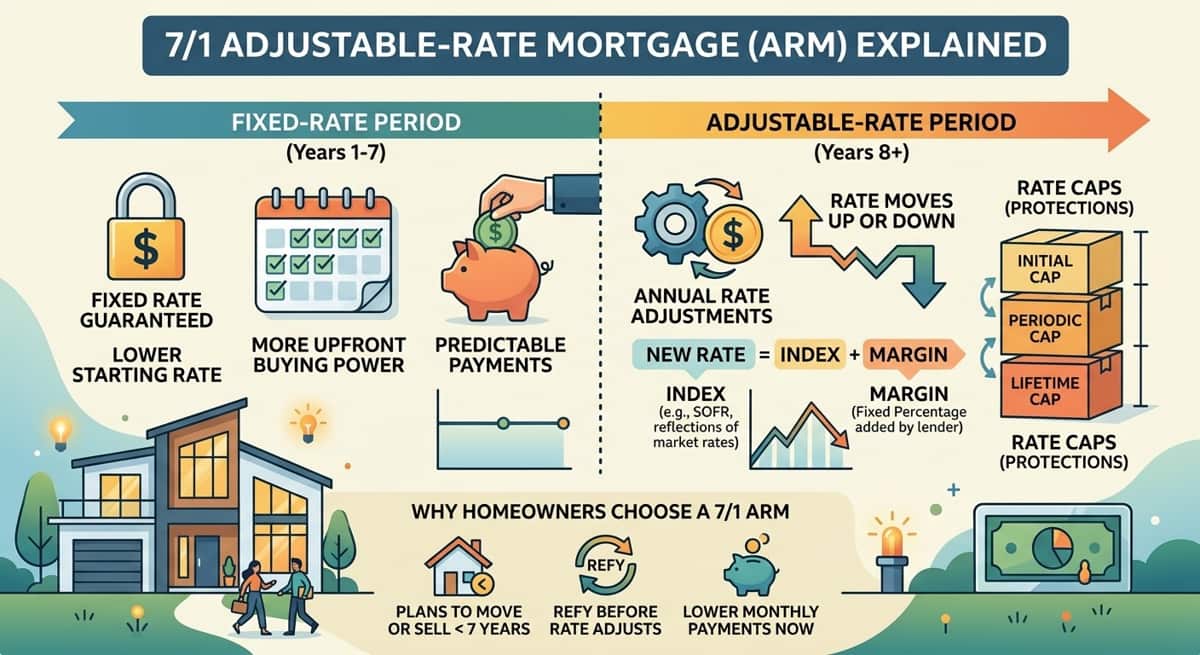
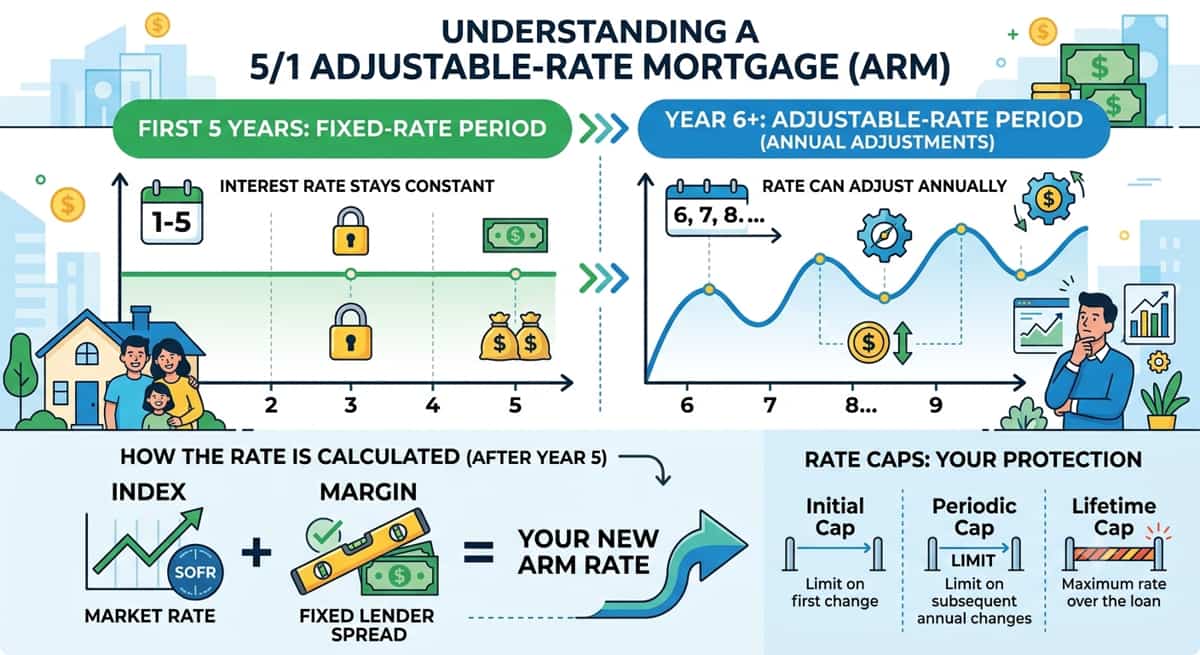
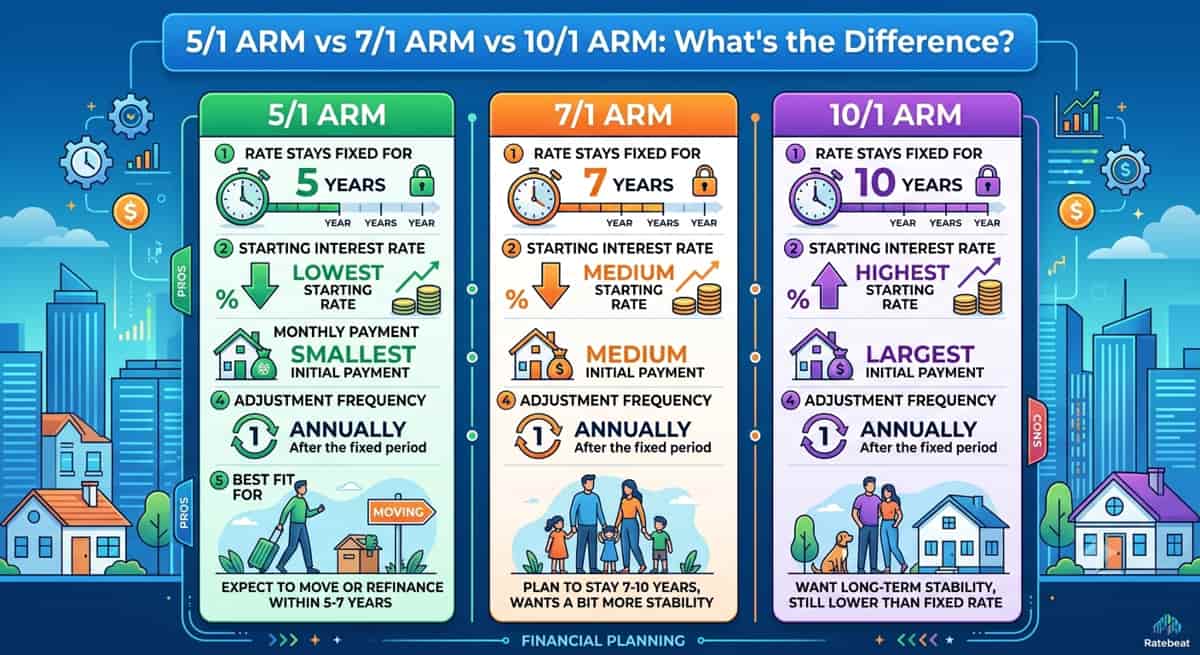
An adjustable-rate mortgage (ARM) offers lower initial rates and payments for a fixed period (typically 5, 7, or 10 years) before adjusting annually based on market indexes. Ideal for short-term homeowners, ARMs provide upfront savings but introduce future payment uncertainty. Rate caps limit maximum increases, and borrowers can refinance later.

Reverse Mortgage Pros and Cons: An Honest Assessment
June 7, 2026
12 min read
MortgageReverse Mortgage

Reverse Mortgage Pros and Cons: An Honest Assessment

A reverse mortgage (HECM) lets homeowners aged 62+ convert home equity into tax-free cash without monthly mortgage payments, repaid when they leave the home. While it provides financial relief and a growing line of credit, downsides include high upfront costs, compounding interest that reduces equity, and strict property tax/insurance obligations.

VA Loan Guide 2026: Benefits, Requirements, and Process
June 6, 2026
12 min read
VAloan

VA Loan Guide 2026: Benefits, Requirements, and Process

Earned through military service, VA loans offer eligible veterans and active-duty members a powerful mortgage option. Key advantages include 0% down payments, no private mortgage insurance (PMI), competitive interest rates, and reduced fees for disabled veterans. The process involves securing a Certificate of Eligibility, finding a VA-approved lender, and exploring refinancing options.

Mortgage Denied? Here's Exactly What to Do Next
June 4, 2026
31 min read
Mortgage

Mortgage Denied? Here's Exactly What to Do Next

How to Use a HELOC for a Down Payment on a Second Home
June 3, 2026
22 min read
HELOCHome Equity

How to Use a HELOC for a Down Payment on a Second Home

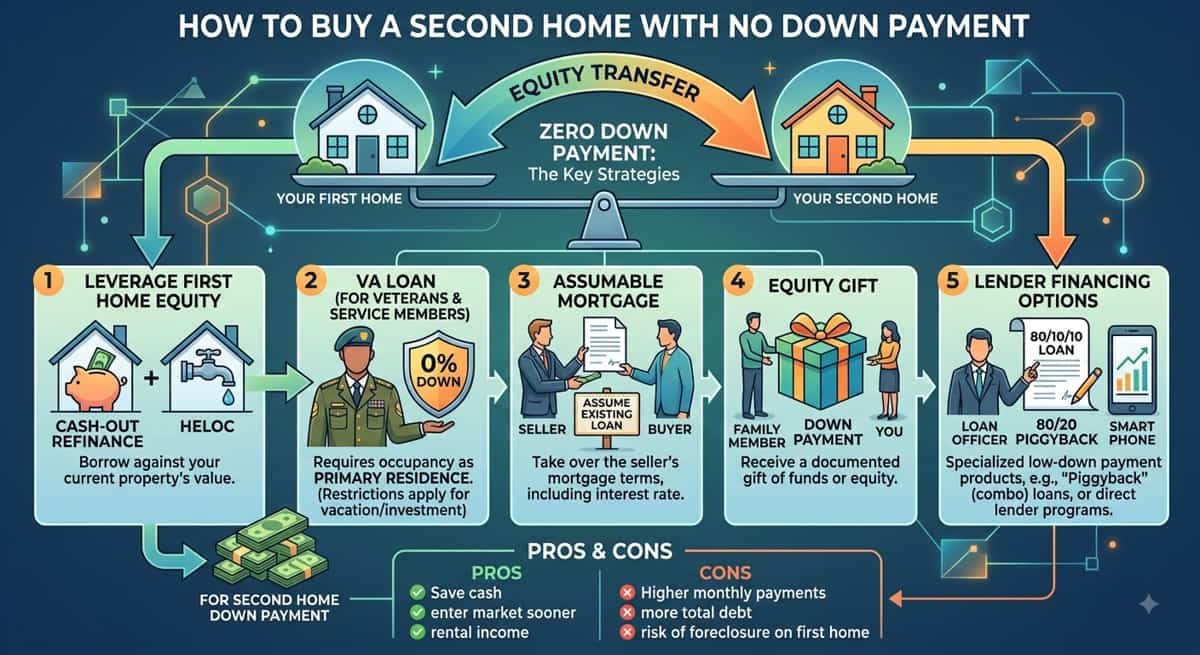
You can use a Home Equity Line of Credit (HELOC) to fund a second home's down payment without selling your primary residence. By leveraging your existing equity up to an 80%–85% combined loan-to-value limit, this strategy avoids draining savings but requires careful management of variable interest rates, strict lender guidelines, and increased monthly debt obligations.