
Buying a home involves more than just the down payment and monthly mortgage. Closing costs can add thousands of dollars to your upfront expenses, covering fees such as loan origination, appraisal, title services, inspections, and other transaction-related charges. The good news is that some closing costs may be negotiable, depending on the lender, seller, loan type, and local market conditions. Understanding which fees you can negotiate and which ones are generally fixed can help you reduce your overall homebuying expenses.
Buyers may also negotiate seller concessions, compare lender fees, or request certain services from different providers to lower costs. Knowing your options before closing can make it easier to avoid unnecessary expenses and keep more money in your budget. In this guide, we’ll explain which closing costs are typically negotiable, how to negotiate them, and what homebuyers should consider before agreeing to their final closing statement.
What Are Closing Costs, Exactly?
Closing costs are the fees you pay to finalize your home purchase, separate from your down payment. They typically add up to somewhere between 2% and 5% of your loan amount. So on a $350,000 loan, that could mean anywhere from $7,000 to $17,500 in additional costs at closing.
These fees generally fall into a few buckets:
Lender fees — what your bank or mortgage company charges to process and underwrite your loan
Third-party fees — payments to outside companies like title companies, appraisers, and inspectors
Prepaid items — things like homeowners insurance and property taxes you pay in advance
Government fees — recording fees and transfer taxes charged by your city or county
Understanding which bucket a fee falls into is the first step to knowing whether it's worth negotiating. That's exactly what we'll cover next.
To be clear, closing costs are different from your down payment. Your down payment goes toward the price of the home itself. Closing costs are the price of getting the loan and the transaction done everything from the person who checks your title history to the office that records the new deed with the county. It can feel like a long list of small charges, but each one exists for a reason, and once you see the whole picture, it's much easier to spot where you actually have some say in the matter.
Are Closing Costs Negotiable?
As a general rule, fees your lender controls tend to be negotiable, while fees set by the government or third-party companies usually aren't.
Think of it this way: your lender wants your business, and if you show them you're comparing offers, they often have some flexibility on what they charge you directly. But nobody can negotiate down a county recording fee or a state transfer tax. Those amounts are fixed, no matter which lender you use.
The trick is figuring out which fees on your Loan Estimate fall into each category, so you know where to focus your energy instead of wasting time asking about something that will never budge.
A lot of buyers assume closing costs are a single, fixed number handed down from the bank, the way a price tag works at a store. In reality, your Loan Estimate is more like a menu: some items are locked in, and others are open to a conversation. The buyers who end up paying less usually aren't the ones with some secret trick. They're just the ones who took the time to ask which line items had room to move, and then actually asked.
Which Closing Costs Can You Negotiate?
Lender Fees (Your Best Opportunity)
This is where most of the real negotiating happens. Fees like the origination fee, application fee, underwriting fee, and rate lock fee are all set by your lender which means your lender can also choose to reduce or waive them.
Lenders have some room to move here because they're competing for your business. If you tell one lender that another offered you a lower origination fee, don't be surprised if they match it or come close. This is also where a strong credit score and a clean financial picture can work in your favor, since lenders often save their best pricing for their most qualified borrowers.
Third-Party Fees You Can Shop Around
Not every fee on your Loan Estimate has to come from whoever your lender recommends. In many cases, you're allowed to choose your own provider for things like:
Title insurance
Home inspections
Pest inspections
Property surveys
Getting a second quote on these services can sometimes save you a meaningful amount of money, especially on title insurance, which varies more by provider than most people expect.
Seller Concessions and Credits
Here's one buyers often forget about: you're not limited to negotiating with your lender. You can also ask the seller to help cover part of your closing costs. This is especially common in a buyer's market, where sellers are more motivated to keep a deal moving.
Instead of asking for a lower sale price, some buyers ask the seller to contribute a set dollar amount toward closing costs. It's a strategy worth discussing with your real estate agent as part of your offer.
Why would a seller agree to this? Because it can actually work in their favor too. A seller who's had their home sitting on the market for a while might prefer to keep their asking price intact for appraisal purposes while still making the deal more attractive to you. It's a win-win in the right circumstances, which is why it's such a common request in slower markets.
Which Closing Costs Are NOT Negotiable
Just as important as knowing what you can negotiate is knowing what you can't so you're not wasting time or getting frustrated over fees that were never going to move.
Fee Type | Why It's Fixed |
Government recording fees | Set by your local county or city |
Transfer taxes | Set by state or local law |
Prepaid property taxes | Based on your local tax rate |
Prepaid homeowners insurance | Set by your insurance provider |
Prepaid interest | Based on your loan terms and closing date |
HOA transfer or setup fees | Set by the homeowners association |
Appraisal fee (in most cases) | Regulated to keep appraisals independent |
These fees exist to protect the process. For example, appraisal fees are kept separate from lender influence on purpose, so the appraiser can give an honest, unbiased value of the home. Knowing this upfront helps you set realistic expectations and focus your negotiating energy where it will actually make a difference.
It's worth saying this plainly: if a fee on your Loan Estimate falls into one of these categories, pushing back on it isn't going to get you anywhere, and it can waste goodwill you might need later in the conversation. Save your energy for the fees that are actually within someone's control.
How to Negotiate Closing Costs: A Step-by-Step Guide
1. Shop Multiple Lenders and Compare Loan Estimates
This is the single most effective thing you can do. Get Loan Estimates from at least two or three lenders, ideally on the same day, since rates and fees shift daily. Line them up side by side and compare the actual dollar amounts, not just the interest rate. Once you have competing offers in hand, you're in a much stronger position to ask your preferred lender to match or beat what someone else offered.
2. Ask About Lender Credits vs. Paying Points
You have a choice in how you handle your rate and your fees. A lender credit means your lender covers some of your closing costs in exchange for a slightly higher interest rate. Paying points works the opposite way you pay more upfront to lower your rate over the life of the loan. Neither option is automatically better; it depends on how long you plan to stay in the home. Ask your loan officer to walk you through both scenarios with real numbers so you can see the trade-off clearly.
3. Negotiate Directly With the Seller
Don't assume closing costs are only a conversation to have with your lender. Depending on the market and how motivated the seller is, you can ask them to contribute toward your closing costs as part of your purchase offer. Your real estate agent can help you figure out how much to ask for and how to frame it so it doesn't jeopardize your offer.
4. Review Your Loan Estimate Line-by-Line
Once you have your Loan Estimate, don't just glance at the bottom number. Go through it line by line and ask questions about anything that looks unfamiliar or unusually high. Lenders are required to explain every fee, and simply ask "can this be reduced or removed?" opens the door to a conversation you might not have had otherwise.
5. Time Your Rate Lock and Closing Strategically
The date you lock your rate and the date you close can both affect your prepaid interest costs. Closing near the end of the month, for example, can sometimes reduce the amount of prepaid interest you owe at closing. It's a smaller lever, but worth discussing with your loan officer when you're mapping out your closing date.
Seller-Paid Closing Costs vs. Buyer Negotiation: What's the Difference?
This is a question I get a lot, and the confusion makes sense both involve reducing what you pay out of pocket, but they work differently.
Buyer negotiation is you working with your lender to lower the fees they charge you directly, like the origination fee or underwriting fee.
Seller-paid closing costs (also called seller concessions) are money the seller agrees to put toward your closing costs as part of the sale, instead of you paying them yourself.
How much leverage you have depends heavily on the market. In a buyer's market, where homes are sitting longer and sellers are more eager to close, you have more room to ask for concessions. In a competitive seller's market, asking for too much can make your offer less attractive.
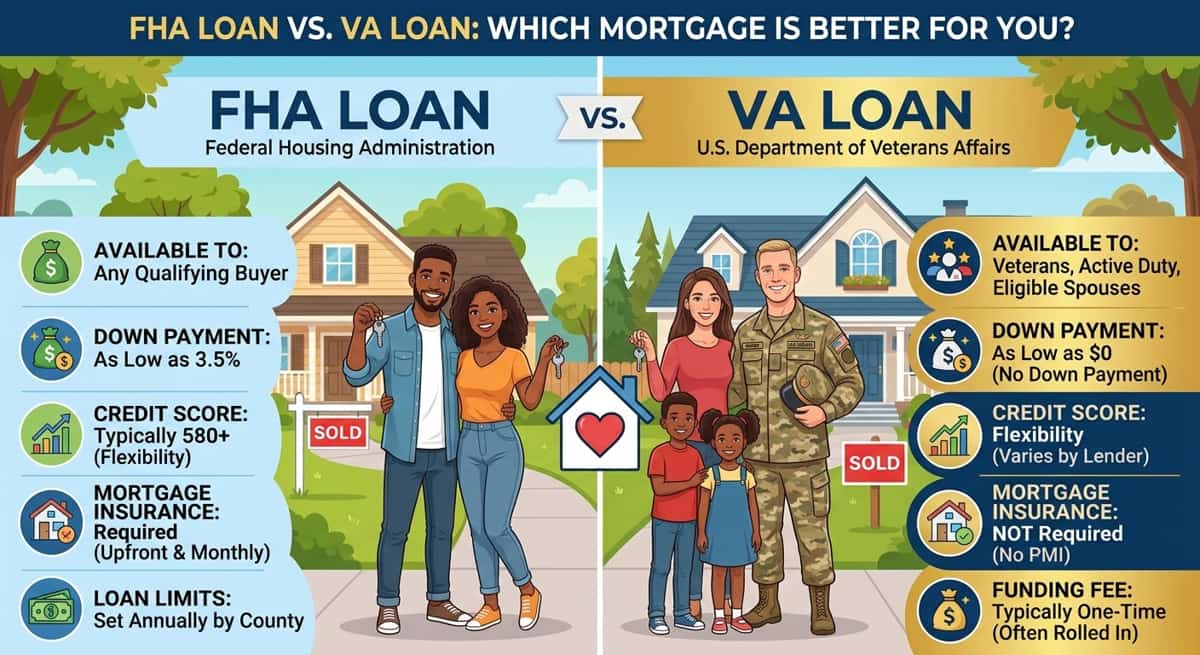
It's also worth knowing that different loan types cap how much a seller can contribute. A conventional loan, an FHA loan, and a VA loan each have their own limits, which is something your loan officer can confirm based on your specific situation.
How a Licensed Mortgage Loan Officer Can Help You Negotiate
I'll be honest with you a lot of buyers don't realize how much of this is negotiable until someone tells them. Part of my job is sitting down with buyers, going through their Loan Estimate together, and pointing out exactly where there's room to ask for more.
I've helped buyers structure lender credits so they could afford a home without draining their savings at closing. I've helped others compare offers from different lenders and used that leverage to get fees reduced. And I've coordinated with real estate agents to help buyers ask sellers for concessions in a way that kept their offer strong.
This isn't about pressuring anyone into anything, it's about making sure you understand your options before you sign. If you'd like a second set of eyes on your Loan Estimate or want to talk through what's realistic for your situation, that's exactly the kind of conversation I'm here to have.
Common Mistakes Homebuyers Make When Negotiating Closing Costs
Focusing only on the interest rate. A slightly higher rate with a lender credit might save you more upfront than chasing the lowest possible rate.
Not comparing Loan Estimates on the same day. Rates and fees change daily, so comparing offers from different days isn't a fair comparison.
Assuming every fee is negotiable. Wasting energy trying to talk down a government fee means less time spent on fees that could actually move.
Waiting too long to ask. The earlier you raise these questions, the more room your lender and the seller have to work with you.
Not asking questions out loud. It's easy to assume a fee is fixed just because it's printed on a form. Most of the time, the only way to find out is to actually ask.
Skipping the walkthrough with your loan officer. A quick phone call to review your Loan Estimate together often uncovers something worth discussing that you might have missed on your own.
Do Closing Costs Work Differently by Loan Type?
The type of loan you choose can affect both your fees and how much help you're allowed to get from a seller.
Conventional loans typically allow seller concessions up to a percentage of the sale price, depending on your down payment size.
FHA loans allow the seller to contribute a set percentage toward closing costs, which can be especially helpful for first-time buyers with less cash on hand.
VA loans allow the seller to cover certain costs and fees, with rules that are a little different from conventional and FHA loans.
USDA loans also allow for seller-paid costs, following their own specific guidelines.
Because these limits and rules can shift, it's worth confirming the current numbers with your loan officer based on the loan program you're using.
Talk to a Licensed Loan Officer Before You Sign
Closing costs aren't a mystery once you know what you're looking at. Some fees are fixed no matter what, but others have more flexibility than most buyers realize and asking the right questions at the right time can make a real difference in what you pay at the closing table.
If you're getting ready to buy and want a clear, honest breakdown of your Loan Estimate, I'm happy to walk through it with no pressure, just a straightforward conversation about your options.