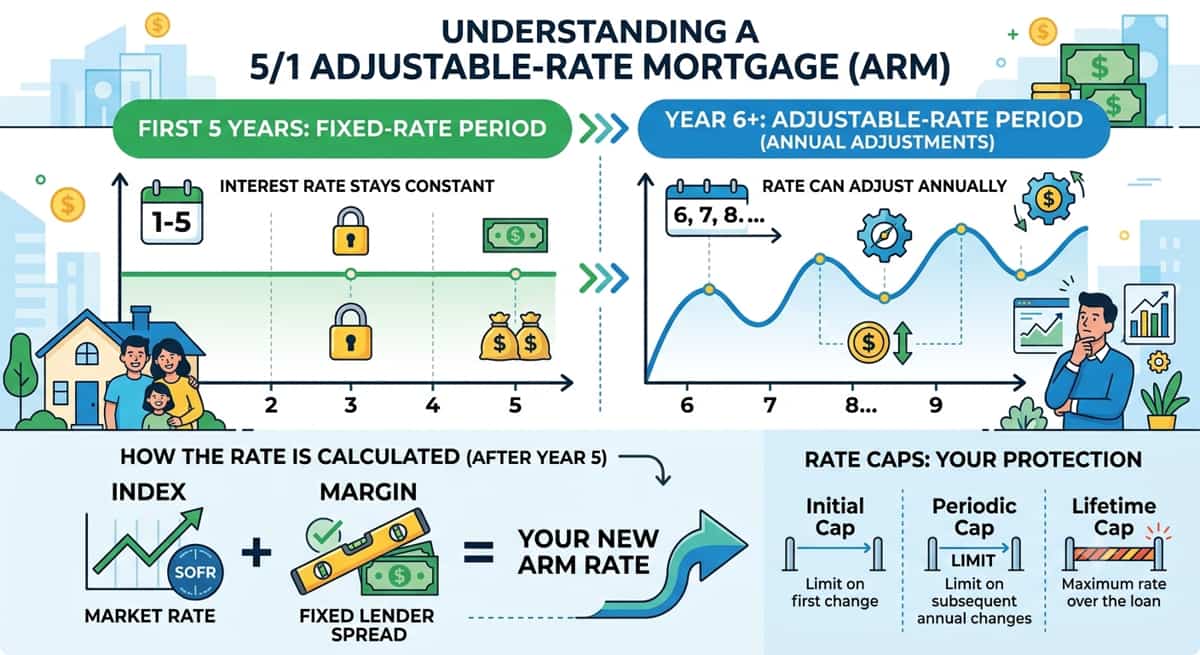
Buying a home is a major financial decision, and choosing the right mortgage can make a significant difference in your monthly budget. A 5/1 Adjustable-Rate Mortgage (ARM) can be an attractive option for borrowers who want a lower initial interest rate and plan to move, refinance, or sell before the rate begins adjusting. Unlike a fixed-rate mortgage, a 5/1 ARM keeps the interest rate fixed for the first five years. After that, the rate can adjust annually based on market conditions and the loan’s terms.
This structure can offer short-term savings, but it also comes with the possibility of higher payments later. Understanding how a 5/1 ARM works, including its benefits, risks, rate adjustments, and payment changes, can help you decide whether it fits your financial goals and homeownership plans.
What Does "5/1" Mean in a 5/1 ARM?
The numbers in "5/1 ARM" aren't just loan jargon they tell you exactly how your rate behaves over time. The "5" means your interest rate is locked in for the first five years, just like a fixed-rate mortgage. The "1" means that after those five years, your rate can change once every year for the rest of the loan term.
Here's a simple way to picture it: say you take out a 5/1 ARM at a 6% starting rate. For years one through five, your rate stays at 6%, no matter what happens in the broader market. Starting in year six, your lender recalculates your rate once a year using a public interest rate index plus a fixed markup called a margin. If rates have gone up, your payment could increase. If they've dropped, it could go down.
You'll also see other ARM types like the 7/1 or 10/1. The main difference is simply how long the initial fixed period lasts 7 years or 10 years instead of 5 before annual adjustments begin. A longer fixed period usually means a slightly higher starting rate, but more time before any changes kick in.
How the Fixed-Rate Period Works
During the first five years, your 5/1 ARM behaves exactly like a fixed-rate mortgage. Your interest rate and monthly principal-and-interest payment stay the same every month, giving you predictable payments while you settle into the home, build savings, or plan your next move. This stability is one of the biggest draws of the loan you get a lower rate than a comparable fixed mortgage without giving up predictability, at least for those first five years.
How Rate Adjustments Work After Year 5
Once the fixed period ends, your lender recalculates your interest rate every 12 months. This new rate is based on a market index (a benchmark that reflects current borrowing costs) plus your loan's margin, which stays the same for the life of the loan. Your monthly payment is then recalculated to match the new rate. This doesn't happen randomly it follows a set schedule spelled out in your loan documents, so you'll always know exactly when your next adjustment date is.
How Is the New Rate Calculated After the Fixed Period?
Once you're past year five, your new rate isn't pulled out of thin air it follows a formula: index rate + margin = your new interest rate. The index is a public benchmark (commonly SOFR, the Secured Overnight Financing Rate) that moves up and down with broader market conditions. The margin is a fixed percentage your lender added when you closed the loan, and it never changes.
For example, if the index sits at 4.5% and your loan's margin is 2.5%, your new rate would be 7%. If the index drops to 3.5% the following year, your rate would adjust down to 6%, assuming nothing else limits the change.
That "assuming nothing else limits the change" part matters and it's where rate caps come in.
Understanding Rate Caps (Initial, Periodic, Lifetime)
Rate caps protect you from sudden, extreme payment shocks by limiting how much your rate can move. There are typically three caps: the initial cap limits how much your rate can jump the very first time it adjusts after year five; the periodic cap limits how much it can change at each adjustment after that; and the lifetime cap sets the absolute ceiling your rate can ever reach over the entire loan term. These caps are outlined in your loan agreement and are one of the details worth reviewing closely with your advisor before you sign, since they define your worst-case scenario.
Example: How Your Payment Could Change
Let's say your 5/1 ARM starts at a 6% rate on a $350,000 loan, with monthly payments around $2,098. If your rate adjusts up to 7% in year six, your payment could rise to roughly $2,357 an increase of about $259 a month. If rates instead fell and your new rate dropped to 5.5%, your payment could actually decrease to around $1,987. The point isn't that rates will definitely go up or down it's that your payment isn't locked in forever the way it is with a fixed-rate loan. You can use mortgage payment calculator to test different rate scenarios and estimate your monthly principal and interest payments.
5/1 ARM vs. Fixed-Rate Mortgage: Which Is Right for You?
This is usually the real question behind "what is a 5/1 ARM" how does it compare to the fixed-rate loan you're probably more familiar with? A 5/1 ARM typically offers a lower starting rate, which can mean real savings in the first five years, especially on a larger loan amount. A 30-year fixed-rate mortgage loan costs a bit more upfront but never changes, giving you full predictability for as long as you hold the loan.
The right choice usually comes down to three things: how much you'd save upfront with the ARM, how comfortable you are with some uncertainty later on, and maybe most importantly how long you actually plan to stay in the home.
When a 5/1 ARM Makes Sense
A 5/1 ARM tends to be a smart fit if you know you'll likely sell, relocate, or refinance within five to seven years a common situation for first-time buyers who expect their household size or job to change, or for anyone buying a "starter home." It can also make sense if you want to free up extra monthly cash flow now, with a solid plan for handling a potential rate change later.
When a Fixed-Rate Mortgage Makes More Sense
If you're buying your forever home, prefer knowing your exact payment for the next 30 years, or simply don't want to think about interest rate movements down the road, a fixed-rate mortgage will likely give you more peace of mind. It's also usually the safer choice if your monthly budget is tight and you wouldn't have room to absorb a higher payment later.
Pros and Cons of a 5/1 ARM
Pros:
Lower starting interest rate compared to most fixed-rate loans
Lower monthly payments during the first five years
Can free up cash for savings, renovations, or paying down other debt
Well-suited to homeowners who don't plan to stay long-term
Cons:
Your payment can increase once the fixed period ends
Budgeting becomes less predictable after year five
Refinancing isn't guaranteed to be available or affordable when you need it
Requires more active planning than a "set it and forget it" fixed mortgage
Neither option is universally "better" it really depends on your timeline, risk comfort, and financial cushion.
Is a 5/1 ARM a Good Fit If You Plan to Refinance Later?
Many homeowners choose a 5/1 ARM specifically because they intend to refinance before the rate ever adjusts and this is where working with an advisor who understands refinancing really pays off. The strategy usually looks like this: take advantage of the lower initial rate, build equity for five years, then explore refinance options to transition into a new loan (fixed or another ARM) before the first adjustment. You can also run the numbers through our refinance savings calculator to see potential future savings.
The catch is that refinancing isn't guaranteed. It depends on future interest rates, your credit profile at the time, and how much equity you've built. It's worth having an honest conversation with your advisor well before year five about what your refinancing options might realistically look like, rather than assuming it will simply happen on schedule.
How a 5/1 ARM Affects Your Home Equity Strategy
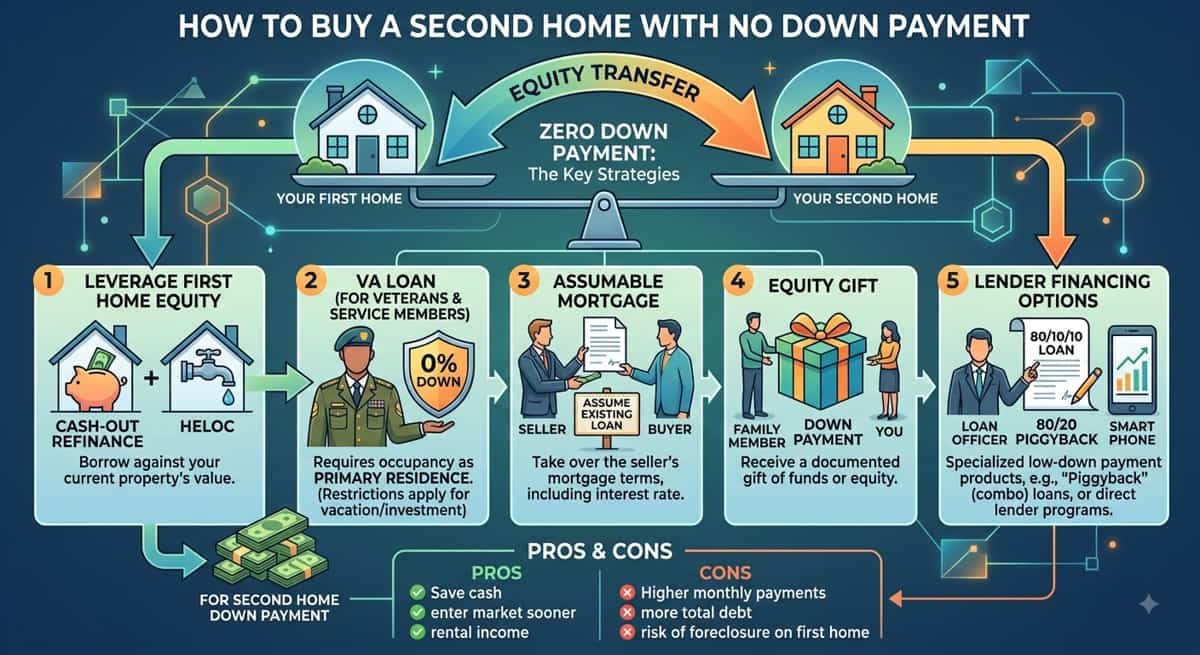
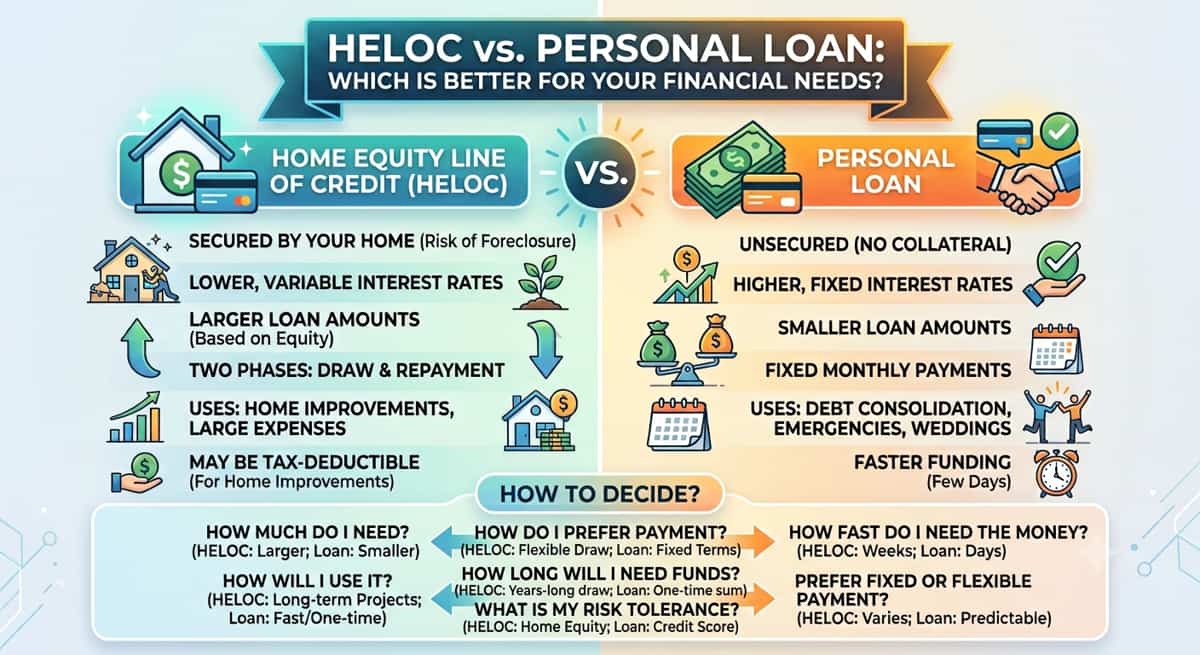
Your equity the portion of your home you actually own outright grows every time you make a payment and whenever your home's value rises. During the fixed-rate years of a 5/1 ARM, that equity often builds steadily and predictably, which can open up options later. Some homeowners use that growing equity to refinance into a fixed-rate loan before their ARM adjusts. Others tap into it through a home equity loan or HELOC to fund a renovation, consolidate debt, or cover a major expense, all while keeping their original mortgage in place. Thinking about your ARM and your equity together, rather than separately, often leads to a stronger long-term plan than looking at the mortgage in isolation.
How to Decide If a 5/1 ARM Is Right for Your Situation
Before choosing between a 5/1 ARM and a fixed-rate mortgage, it helps to ask yourself a few honest questions:
How long do I realistically expect to stay in this home?
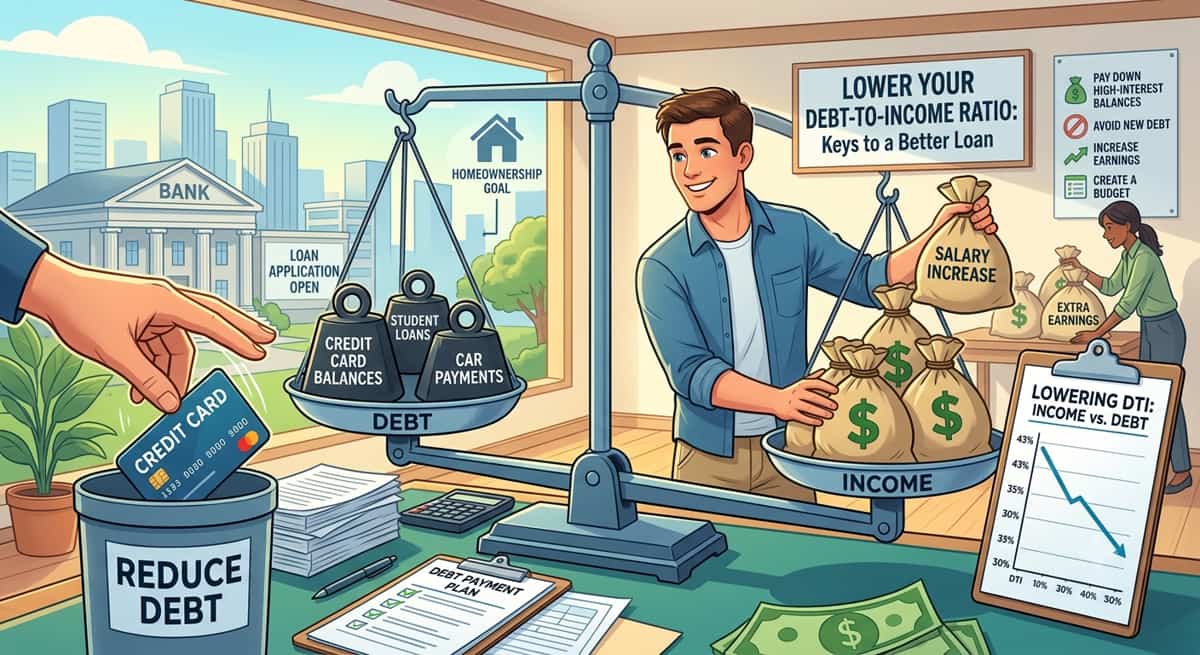
Could my budget handle a higher payment if my rate adjusted upward?
Do I have a realistic refinancing plan, and am I comfortable if that plan doesn't work out exactly as expected?
Am I more focused on saving money now, or on long-term payment stability?
Working through these questions with a licensed mortgage advisor and taking time to compare current mortgage rates side by side can help you make a decision based on real numbers rather than guessing which loan 'sounds' better.
Talk to a Licensed Mortgage Advisor About Your Refinancing Options
Choosing between a 5/1 ARM and a fixed-rate mortgage is a personal decision, and the right answer depends on your specific timeline, budget, and goals not a one-size-fits-all rule. As a mortgage advisor focused on home equity and refinancing, I work with homeowners every day to compare these options side by side and build a plan that fits their life, not just their loan. If you're weighing a 5/1 ARM, refinancing an existing mortgage, or exploring how to put your home equity to work, reach out for a personalized consultation no pressure, just clear answers so you can move forward with confidence.
Key Takeaways
A 5/1 ARM has a fixed rate for 5 years, then adjusts once per year based on a market index plus a margin.
Rate caps limit how much your payment can jump at each adjustment and over the life of the loan.
These loans often start with a lower rate than a 30-year fixed mortgage, which means lower payments early on.
They tend to work best for people who plan to move, sell, or refinance within five to seven years.
If you're not planning to refinance or sell before the fixed period ends, it's worth thinking carefully about how you'd handle a possible payment increase.