
You've done the hard work. You’ve submitted your application, navigated the disclosures, and received an incredible mortgage rate that fits your financial goals perfectly. The finish line—your closing day—is finally in sight. But then, a costly, unexpected charge appears: the Mortgage Rate Lock Extension Fee. This fee is a common pitfall that can cost homeowners and refinancing clients thousands of dollars, tarnishing the excitement of securing their new loan.
As an experienced Loan Officer and Mortgage Consultant specializing in the intricacies of Home Equity and Refinancing for the US audience, I’ve guided hundreds of clients through the closing process. I understand that when you secure a rate, you expect it to hold. Unfortunately, delays are common, and when your initial rate lock period expires, the lender charges a premium to hold that rate for a few more days or weeks. This charge is not optional and can significantly impact your closing costs.
Given that securing a loan involves your most significant financial decisions—a clear YMYL topic—my purpose with this guide is to protect your money and provide you with absolute clarity. This article will transform a confusing and costly problem into a manageable one. You will learn precisely what the Mortgage Rate Lock Extension Fee is, uncover the most common reasons loans require this extension, and, most importantly, gain access to my proven, professional 7-Point Strategy for Avoiding this Cost Entirely. Don't let a last-minute fee compromise your savings; let's master the finish line together.
Defining the Mortgage Rate Lock and Its Extension Fee
To successfully navigate the loan process, you must first understand the contractual bedrock of your rate and what happens when that contract expires. Given the financial significance of this transaction, having crystal-clear definitions of these terms is essential for protecting your investment.
The Mechanics of Your Rate Lock: A Contractual Safety Net
A mortgage rate lock is essentially a contractual agreement between you and your lender that guarantees a specific interest rate for a defined period of time. This is your financial safety net, protecting you from rate increases while your loan is being processed. In a volatile market where interest rates can shift dramatically in a single week, securing this lock is critical to ensuring your monthly payment remains predictable.
Standard lock periods are typically 30, 45, or 60 days. The length of your lock is determined at the time of application and is often factored into the initial interest rate you receive. Generally, a shorter lock (e.g., 30 days) may offer a slightly lower rate, while a longer lock (e.g., 60 days) comes with a marginally higher rate because the lender is taking on more risk by guaranteeing that rate for an extended period. The key is that the clock starts ticking the moment the lock is officially secured.
How the Extension Fee is Calculated and Why it’s Non-Negotiable
A Rate Lock Extension Fee is the penalty charged when your loan fails to close before the initial lock period expires. Since the lender has already committed to funding your loan at the locked rate, they must charge a fee to hold that rate for an additional window.
This fee is typically calculated as a percentage of your total loan amount, such as 0.125% to 0.500% for a 7- to 15-day extension. For a $400,000 loan, a 0.25% extension fee would be $1,000. The reason this fee is non-negotiable is due to the principle of "cost of carry." The fee compensates the lender for the risk they incur by holding that favorable rate for you. If interest rates have risen since your lock, the lender is losing money by not lending that capital at the new, higher market rate. The extension fee mitigates this risk and ensures the lender can maintain its commitment to you without financial detriment.
5 Critical Reasons Loans Require Rate Lock Extensions
Understanding why a loan is delayed is the first step toward proactive prevention. As an expert, I categorize the causes of necessary rate lock extensions into five critical areas, spanning issues caused by the borrower, the lender, and third parties.
Delays Caused by the Borrower: The Documentation Black Hole
Surprisingly, the borrower is often the source of delays. The process stalls when there is a lapse in providing complete and timely documentation. Common borrower mistakes include:
- Incomplete or Expired Documents: Submitting bank statements that are 61 days old or W-2s that are incomplete.
- Slow Response Times: Taking days to respond to the Underwriter’s requests for "conditions" (additional items needed for approval). Underwriters will halt file review until all items are in.
- Significant Financial Changes: Making large, unexplained deposits, quitting a job, or taking out new credit (e.g., a car loan) during the process. These changes trigger new disclosure and review requirements that consume valuable time.
Lender and Underwriting Backlogs: When In-House Process Stalls
Even a perfect file can be delayed by the lender’s internal capacity. High-volume periods, such as when rates are dropping rapidly, can overwhelm a lender’s operations, leading to lender and underwriting backlogs. Staff shortages or inefficient processing systems mean your file sits in a queue, waiting for review.
When selecting a mortgage professional, it is paramount to choose a lender with a strong reputation for managing its volume and closing on time. Inquire about their typical underwriting turnaround times before you lock your rate. A lender who prioritizes service and operational efficiency is a key partner in avoiding extension fees.
Third-Party Complications: Appraisals, Title, and HOA Hurdles
Many critical steps in the lending process are outside both the borrower's and the lender's direct control, making them frequent sources of delay:
- Delayed Appraisal Reports: Appraisals are crucial for determining the property’s value, especially in Home Equity and Refinancing scenarios. If the appraiser has a packed schedule or the property is complex, the report may be late. This is arguably the most common culprit.
- Title Defects and Clearances: The Title Company must confirm the property’s ownership history and clear any defects, such as unreleased mortgages, old liens, or boundary disputes. Correcting these issues can take weeks and will stop closing instantly.
- Homeowners Association (HOA) Documentation: For loans involving condos or properties within an HOA, the lender requires extensive documentation (e.g., declarations, budgets, master insurance policies). Getting these documents from the HOA can be notoriously slow, easily leading to a rate lock expiration.
My Professional 7-Point Strategy for Avoiding the Extension Fee
Avoiding the mortgage rate lock extension fee is not about luck; it’s about preparation and professional strategy. Based on my experience guiding hundreds of clients, I’ve distilled the process into seven actionable steps that put you in control and ensure a smooth, timely closing.
1. Select a Proactive, Experienced Mortgage Professional First
The single most critical decision you make is vetting your mortgage professional, not just hunting for the lowest rate. A truly experienced Loan Officer or Mortgage Consultant specializes in navigating the complex and nuanced lending environment in the US. They preempt issues by flagging potential concerns (like an old lien or a complex income structure) at the very start. A seasoned professional acts as your conductor, orchestrating the appraisal, title, and underwriting processes simultaneously to keep the timeline intact. Their efficiency is your best defense against unexpected fees.
2. The Power of a Complete Application Package from Day One
Underwriters dislike surprises. The biggest delays happen when a file goes to underwriting multiple times because information is piecemeal or incomplete. Your goal is to provide a comprehensive, documented application package before the lock even starts.
Your Initial Document Checklist:
- Income: Two years of W-2s and the most recent 30 days of pay stubs.
- Assets: The two most recent monthly bank statements (60 days) for all accounts showing funds for closing.
- Property: If purchasing, a fully executed purchase contract. For refinancing/Home Equity, the current mortgage statement and homeowner’s insurance declaration page.
Submitting these documents perfectly ensures your file moves from application to final approval as quickly as possible, bypassing the "Documentation Black Hole."
3. Start with a Realistic Closing Timeline and Lock Period
It's tempting to lock for the shortest period (30 days) to get a marginally lower rate, but this is a gamble that rarely pays off. A 30-day lock leaves almost no margin for error. My expert advice is to choose a 45- or 60-day lock as a contingency buffer, especially for complex Home Equity or Refinance transactions, or if you are in a state known for slow title work.
While longer locks may be fractionally more expensive upfront, consider it cheap insurance. If your loan closes in 35 days, you saved yourself from a costly, potentially $\$1,000+$ extension fee that a 30-day lock would have incurred. Always ask your consultant to align the lock period with the most conservative estimate of the closing timeline.
4. Vetting Your Chosen Title Company and Attorney
The title or closing agent is often the unsung bottleneck of the mortgage process. They are responsible for coordinating the closing, clearing the title, and securing all necessary documents (like payoff statements). Their efficiency directly impacts your closing date.
If your state allows you to choose your title provider, ask your lender for a list of companies they work with regularly and inquire about their average title turnaround time. A good lender works with reliable third parties who prioritize efficiency, ensuring the title clearance—a critical component of any loan—is finished well within your lock period.
5. Proactively Managing Appraisal Turn Times
The appraisal is almost universally the biggest point of failure for on-time closings. Whether you're refinancing or tapping into Home Equity, the lender needs a precise, timely valuation of your property. Stress the importance of the lender ordering the appraisal immediately upon application submission. Do not wait until the underwriting review begins.
In extremely busy markets, discuss whether paying a rush fee for the appraisal is a worthwhile investment. If an appraisal delay is going to cost you a 0.25% extension fee (e.g., $\$1,000$), paying a $\$200$ rush fee upfront is a clear financial winner and demonstrates proactive risk management.
6. Stay Available: The 24-Hour Rule for Underwriter Conditions
Once your file is in underwriting, the underwriter will inevitably request final "conditions" or clarifications—this is standard procedure. Your professional commitment at this stage is to adhere to the 24-Hour Rule: respond to your Loan Officer with the requested documentation within 24 hours. A delay of one or two days on your part is a delay of one or two days for the file, which compounds quickly at the end of the lock period.
7. Negotiate the Lock Structure (If You Must Extend)
If, despite all best efforts, a delay occurs and your lock is about to expire, immediately determine the cause. If the delay is demonstrably the fault of the lender (e.g., an internal underwriting backlog that violates their promised turn times), you may have grounds to ask for a free, complimentary extension for a short period. This is an internal decision for the lender, but a seasoned professional will know how and when to make this request on your behalf, potentially saving you the entire extension fee.
Tailoring Your Strategy: Home Equity and Refinancing Rate Locks
While the seven-point strategy applies to all mortgages, Home Equity and Refinancing loans have unique nuances that can introduce unexpected delays. Since these transactions represent the core focus of my consultancy, understanding these specialized risks is key to a smooth closing.
Refinancing Nuances: Payoffs and Subordination
When you refinance your primary mortgage or take out a new Home Equity loan, the primary delay often involves coordinating with existing lenders. Two critical documents must be secured:
- Payoff Statement: If you are refinancing your primary mortgage, your new lender needs the exact, signed payoff statement from your current mortgage provider. Securing this can be unexpectedly slow, particularly with larger national banks.
- Subordination Agreement: If you currently have a Home Equity Line of Credit (HELOC) or a second mortgage that will remain in place, the existing lender must agree to subordinate their lien position to the new first mortgage. Securing this Subordination Agreement requires multiple internal approvals from the existing lender and is a notorious, multi-week bottleneck.
For both scenarios, assume that the coordination with external lenders will take longer than anticipated, and adjust your rate lock period accordingly.
Home Equity Loans and Cash-Out Complexities
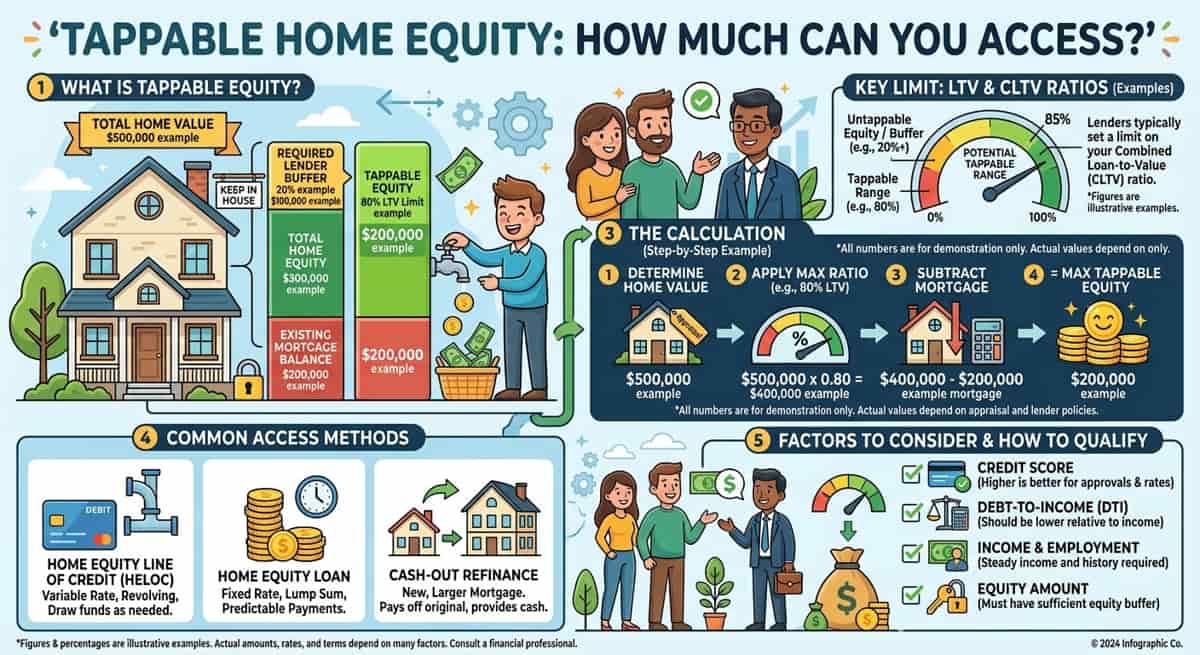
When obtaining a new Home Equity loan or executing a cash-out refinance, the valuation process is often subject to tighter scrutiny. The lender is highly focused on the Loan-to-Value (LTV) ratio, meaning any delay in the appraisal or any unfavorable comparable sales could trigger a required review or a reduction in the loan amount. This re-review process consumes valuable time, potentially pushing you past your rate lock deadline.
The Documentation Advantage (and Responsibility)
In both Refinancing and Home Equity transactions, you, the borrower, already own the property. This means you have a distinct advantage and a clear responsibility regarding documentation. There is no seller to wait for. The onus is entirely on you to provide all necessary current documentation immediately:
- Homeowners Insurance Declaration Page
- Current Mortgage Statements and Payoff Authorization Forms
- HELOC or Second Mortgage Statements
By gathering these immediately, you eliminate one of the biggest initial sources of delay and maintain control over your closing timeline, drastically reducing the risk of incurring an extension fee.
Conclusion: Your Finish Line Doesn't Have to Be Expensive
The Mortgage Rate Lock Extension Fee is a frustrating, yet entirely avoidable, cost that can compromise your financial planning at the eleventh hour. Ultimately, safeguarding your closing timeline boils down to three key pillars:
- Knowledge is Protection: Understand the mechanics of the rate lock and the common culprits—from appraisal delays to title defects—that threaten its expiration.
- Choose a Longer Lock: Don't gamble on a shorter, marginally cheaper rate. Build a realistic contingency buffer into your lock period (45 or 60 days) to absorb the inevitable delays of a complex financial process.
- Communication is Paramount: Your proactive participation in providing documents immediately and responding quickly to underwriting requests is the engine that drives a fast closing.
The mortgage process should be exciting, not stressful. For significant transactions like Home Equity or Refinancing, partnering with a professional who anticipates these issues is your greatest advantage. My goal as your seasoned Mortgage Consultant is simple: to ensure you never pay for a delay that could have been prevented. By following this expert guide, you are positioned to cross the finish line on time and on budget.