
If you're an ambitious self-employed business owner, entrepreneur, or successful freelancer in the USA, you're likely familiar with a common financial paradox: you are asset-rich but, thanks to smart tax strategies, often appear "tax-poor" on paper. While managing your tax liability is crucial for business growth, it creates a significant hurdle when you seek high-value financial products like a cash-out refinancing or a Home Equity Line of Credit (HELOC).
Traditional mortgage underwriting is designed for W-2 wage earners, relying on simple tax returns and pay stubs. Your income verification process—involving complex Schedule C or K-1 forms—presents an immediate challenge. Standard lenders often struggle to accurately assess your true, consistent cash flow and ability to repay when faced with the generous write-offs and deductions you claim.
This is precisely where the specialized financial tool known as the Accountant's Letter becomes indispensable.
As your dedicated Mortgage Consultant, I understand that your financial picture is sophisticated, not deficient. Our goal in this comprehensive guide is to define a clear, successful pathway to securing the financing you need. We will demystify the process of leveraging an Accountant's letter low-doc mortgage to obtain approval. By focusing on compliant documentation and strategic presentation, we can turn your business success into mortgage eligibility, ensuring you make the most of your existing home equity without compromising your carefully constructed tax profile. Let's get started on transforming your financial complexity into lending clarity.
Understanding Low-Doc Loans: A Non-QM Lending Overview
When your income documentation doesn't fit the rigid box of conventional Qualified Mortgages (QM), you enter the realm of Non-Qualified Mortgages (Non-QM), commonly known as Low-Doc loans. These are specialized products designed for financially sound borrowers who simply cannot prove their income using standard tax forms. Providing an authoritative, transparent overview of this niche lending space is crucial, as these loans represent significant financial decisions.
Who Low-Doc Loans Serve Best
Low-Doc loans are specifically tailored to serve the diverse class of self-employed individuals and those with unique income streams. This includes:
- Entrepreneurs and Small Business Owners
- Freelancers and Independent Contractors (1099 workers)
- Real Estate Investors
- Professionals with significant seasonal or commission-based earnings.
For these borrowers, the challenge is not a lack of income, but the way it's recorded. Instead of relying on tax returns that minimize taxable income, Low-Doc loans often utilize alternative verification methods, most commonly personal or business bank statements (typically 12 or 24 months) to calculate average monthly deposits. This approach focuses on your actual cash flow rather than your adjusted gross income, providing a more accurate snapshot of your true ability to repay.
The Trade-Offs: Rates and Risk
As a responsible financial advisor, it is important to disclose the inherent trade-offs associated with Low-Doc, or Non-QM, lending. Because the income verification process deviates from the standard regulatory mold, lenders take on a higher perceived risk. To mitigate this, Low-Doc loans typically come with higher interest rates and fees compared to traditional mortgages.
This pricing difference is a direct reflection of the additional steps the lender must take in underwriting, including deeper analysis of assets and the use of the Accountant's Letter itself.
To compensate for the reduced income documentation, Non-QM lenders place extra emphasis on other stability factors:
- Strong Credit History: A high FICO score demonstrates a reliable payment track record.6
- Lower Loan-to-Value (LTV): Lenders may require a larger down payment or more equity in a refinancing scenario, reducing their exposure.
- Higher Reserve Requirements: You may need to show proof of significant financial reserves (cash in the bank) after closing, often calculated in months of principal, interest, taxes, and insurance (PITI) payments.
A clear understanding of your Debt-to-Income (DTI) ratio, as calculated using the Low-Doc methods, alongside these factors, is essential for a successful application. Navigating these nuances with an experienced consultant is key to making a sound financial decision.
The Accountant's Letter Decoded: Requirements for Underwriting Success
The Accountant's Letter is the bedrock of your Low-Doc loan application. For mortgage underwriters, this document acts as a certified, professional third-party validation of your financial health, translating complex business finances into lending-friendly terms. Understanding its strict requirements is the first step toward approval.
Core Components of a Compliant Letter
To meet modern U.S. mortgage underwriting guidelines, your letter must adhere to a rigid format and contain specific, unambiguous assurances.First and foremost, the letter must be drafted and signed by a Certified Public Accountant (CPA) or a Registered Tax Preparer (RTP) who has a long-standing, verifiable relationship with your business. The professional designation lends the necessary authoritativeness to the document.
The core function of the letter is to attest to the borrower’s ability to repay the loan. The CPA must explicitly address the following key points:
- Income Stability and Consistency: A clear statement confirming that the borrower’s income is stable, consistent, and sufficient to service the proposed mortgage debt. This often involves commenting on the historical performance of the business.
- Reasonable Expectation of Continuance: The CPA must affirm that, based on their knowledge of the business, they have a reasonable expectation that the income and business operations will continue for at least the next three years.
- Active and Operational Business: A definite confirmation that the self-employed business is active, legally operational, and the primary source of the attested income. The letter must be dated currently and printed on the CPA's official letterhead.
Why Clarity and Detail Satisfy Underwriters
Underwriters seek precision and verifiable facts. To ensure your letter moves smoothly through the approval process, it must use the language of finance and lending.
Avoid Ambiguity and Speculation. The letter should never contain ambiguous language or speculative future earnings forecasts. Phrases like "We believe the business might do well" or "The income could increase" are red flags. Instead, the focus must be on quantifiable historical data and current, sustained performance.
Use Strong Semantic Keywords. The most effective letters utilize specific, powerful terms that satisfy lending requirements, such as:
- "Stable Revenue"
- "Consistent Cash Flow"
- "Business Longevity"
- "Sustainable Income Stream"
These phrases signal financial health and reliability to the automated and human review processes.
Furthermore, the Accountant's Letter must not stand alone; it must reference and be supported by other key documentation. Instruct your CPA to explicitly state which financial documents they reviewed to reach their conclusion. These typically include:
- Year-to-Date Profit and Loss (P&L) Statements
- Recent Business Bank Statements
- A current Balance Sheet
By providing this clear, detailed, and corroborated view of your finances, the Accountant's Letter effectively closes the income gap, turning your complex earnings into an undeniable case for low-doc mortgage approval.
Strategic Preparation: Optimizing Your Financial Profile for Low-Doc Approval
Successfully navigating a Low-Doc loan application requires more than just submitting paperwork; it demands a strategic, professional approach to your entire financial profile. Based on years of processing these specialized loans, here is the high-value advice needed to maximize your chances for rapid approval.
Pre-Emptive Steps with Your CPA
The key to a smooth Low-Doc process begins with synchronicity between you, your CPA, and your Mortgage Consultant before the loan application is formally submitted. The Accountant's Letter must be current and prepared in advance.
The Experienced Loan Officer's Checklist for Your Accountant:
- Provide History: Furnish your accountant with the last two full years of documented business activity, including year-end Profit and Loss (P&L) statements, as well as the current Year-to-Date (YTD) P&L. This allows the CPA to speak confidently about business longevity and income consistency.
- Clear Delineation: Ensure there is a clear separation between business and personal expenses. Underwriters scrutinize expense reports. The CPA must be able to confirm that business expenses are legitimate and that a significant portion of business revenue is consistently available to the principal.
- Bank Statement Review: If you are using bank statements as the primary income measure, confirm that the CPA has reviewed those same statements and that the income figures in the letter align with the cash flow analysis derived from the deposits.
- Use the Template: Provide your CPA with a template or specific required language provided by your Mortgage Consultant to ensure all necessary underwriting affirmations are included.
Optimizing Your Credit and Assets
Since the income component of your application is unconventional, the underwriter will place heightened importance on the stability of your credit and assets. These factors offset the risk perceived from alternative income documentation.
- Credit Strength is Non-Negotiable: A strong personal credit score (FICO) is crucial. A clean payment history demonstrates financial discipline and reliability, directly compensating for the complexity of your income structure. Aim for the highest possible score, as it often determines the best available Non-QM rates.
- Liquid Assets Supplement the Story: Submitting statements for your readily liquid investment and savings accounts can significantly bolster your application. Showing substantial financial reserves—funds available after closing the loan—provides the lender with extra assurance that you can withstand temporary business fluctuations. These reserves, often measured in months of PITI payments, showcase your overall financial stability.
Avoiding Common Low-Doc Pitfalls
Even with a perfect Accountant's Letter, small mistakes can lead to delays or outright rejection. Avoid these common errors:
- Commingling Funds: Never mix business and personal finances. All deposits and withdrawals must be clearly identifiable. Commingling funds is a major red flag that undermines the credibility of the bank statements and the CPA’s letter.
- Unexplained Deposits: Avoid large, random deposits into your business or personal accounts immediately preceding or during the application process. If a large deposit occurs, ensure you have a clear, written explanation and documentation (e.g., sale of a separate asset, documented business payment) ready.
- Changing Accountants: Do not change your CPA just before applying. Underwriters prefer letters from accountants who have worked with you for at least one to two years, demonstrating a long-term, verifiable professional relationship.
By managing these non-income factors strategically, you provide the underwriter with a holistic, low-risk profile, streamlining your path to securing your refinancing or home equity loan.
The Home Equity Connection: Refinancing and HELOCs with a Low-Doc Strategy
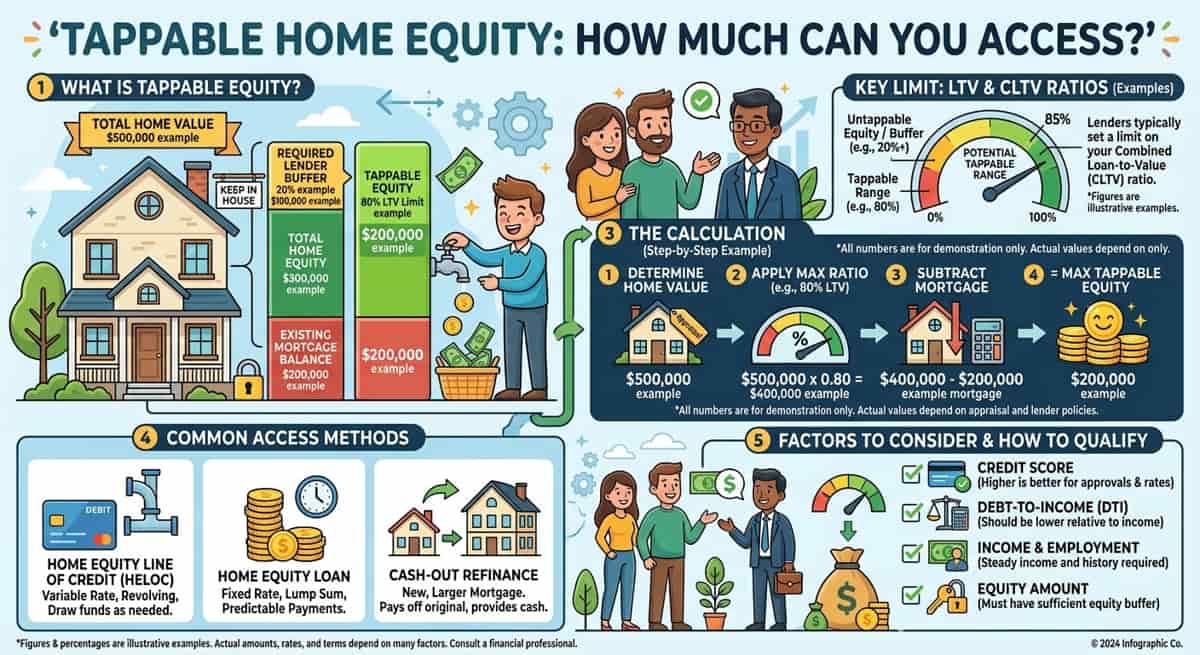
For the self-employed borrower, a Low-Doc strategy is not just about getting approved for a purchase; it's often the crucial leverage point for accessing accumulated home equity for business expansion or financial reorganization. The Accountant's Letter proves vital in two of the most popular home equity solutions: cash-out refinancing and Home Equity Lines of Credit (HELOCs).
Cash-Out Refinancing with Low-Doc
A cash-out refinance allows you to replace your existing mortgage with a larger loan, taking the difference in tax-free cash. Since this loan is larger, the underwriter must verify sufficient income to service the higher debt payment. This is where your Accountant's Letter shines.
Instead of your tax returns showing minimal taxable income, the letter provides the necessary third-party assurance of your higher actual cash flow, qualifying you for the increased loan amount.
By leveraging your equity through this method, you gain access to capital often used to:
- Fund Business Growth: Invest in new equipment, inventory, or expansion.
- Consolidate High-Interest Debt: Replace expensive personal loans or business debt with a lower-interest mortgage debt.
- Invest in Other Assets: Free up capital for diversification.
Securing a HELOC with Self-Employed Income
A Home Equity Line of Credit (HELOC) functions like revolving credit, giving you flexibility. However, HELOC underwriters are particularly cautious about self-employed applicants due to the potential for fluctuating income.
The Accountant’s Letter stabilizes this narrative. It provides a formal declaration of your consistent, sustained earnings, mitigating the underwriter's concern over month-to-month income variations. It assures them that you have the stable ability to repay the line of credit during the draw period when you actively use the funds.
Key considerations for a Low-Doc HELOC include the appraisal requirement—ensuring the property value supports the desired credit limit—and stringent reserve requirements to prove ongoing liquidity. The more robust the Accountant's Letter, the stronger the case for the lender to approve your maximum available credit limit.
Why the Right Advisor Matters
The world of Non-QM and Low-Doc lending is highly specialized. Not all banks offer these products, and those that do have varying guidelines and appetite for risk. The success of your application—especially one that involves strategic equity access—is directly tied to the expertise of your Mortgage Consultant.
A consultant with specific experience in these alternative lending solutions can match your unique financial profile to the most advantageous lender programs, ensuring your Accountant's Letter is perfectly tailored to their criteria. Working with a dedicated professional eliminates guesswork and significantly streamlines the process of unlocking your home's capital.
Final Considerations and Next Steps for Financial Confidence
Successfully securing a Low-Doc mortgage for refinancing or home equity access relies on merging meticulous documentation with specialized lending knowledge. The Accountant's Letter is your primary tool, providing the formal assurance required to transform your self-employed income into verified eligibility. By pairing this strong, compliant letter with the guidance of a professional consultant, you bypass the limitations of traditional underwriting and achieve your financial goals with confidence.
Ready to leverage your home equity through a compliant Low-Doc refinance or HELOC? Take the next step toward maximizing your capital. Schedule a consultation with a specialist today to assess your unique financial profile and map out your path to approval.