If you've ever tried to Google "how to refinance a manufactured home," you probably noticed something frustrating: most of the advice out there is written for regular, site-built houses. It doesn't quite fit your situation, and that can leave you with more questions than answers.
Manufactured home refinancing works differently, and the rules can feel confusing if no one's walked you through them before. As a licensed mortgage advisor who works with manufactured homeowners every week, I've seen the same questions come up again and again Can I even refinance? Do I need to own my land? Why do some lenders say no when others say yes?.
Can You Refinance a Manufactured Home?
Yes, you can refinance a manufactured home but it depends on a couple of key things.
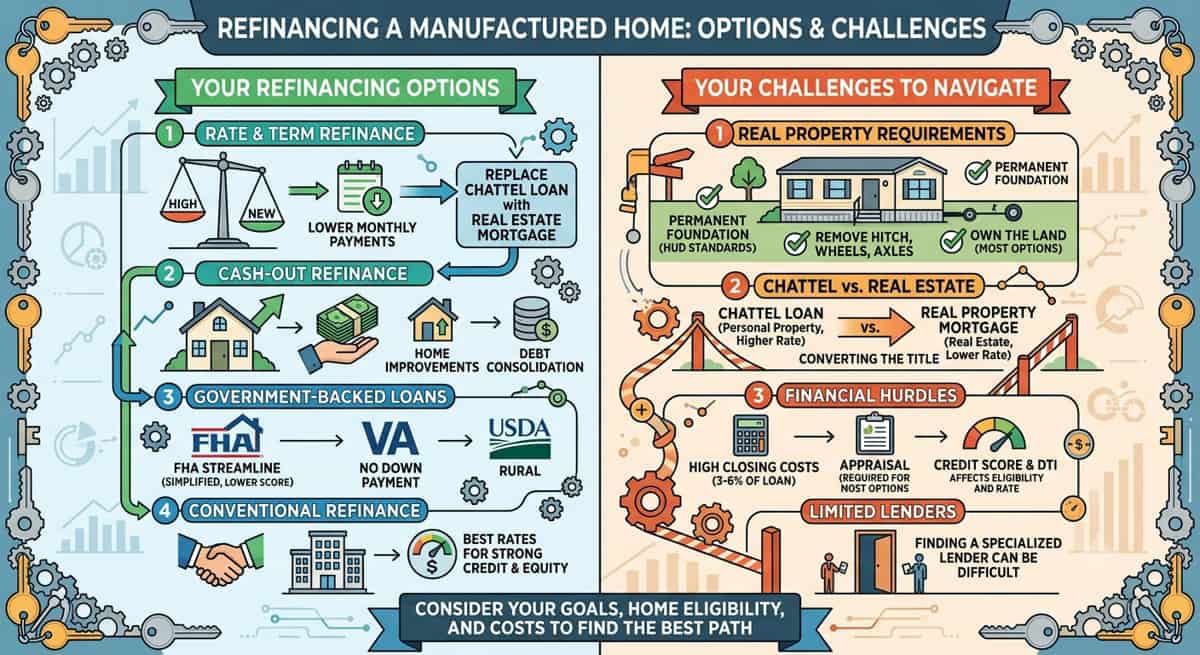
First, your home generally needs to be classified as real property, not personal property. That means it's permanently attached to a foundation on land you own (or in some cases, land you have a long-term lease for), and the title has been converted from a vehicle-style title to a real estate title, similar to a site-built home.
Second, your home usually needs to meet HUD Code standards a federal building code that's applied to manufactured homes built after June 1976. If your home was built before that date, most lenders won't be able to refinance it at all, regardless of its condition.
If your home checks both of these boxes, you have real options. If it doesn't say, it's still titled as personal property, or it's sitting on rented land you're not necessarily out of luck, but your path looks a little different, which we'll cover below.
Why Manufactured Homes Are Harder to Refinance Than Site-Built Homes
It's not your imagination refinancing a manufactured home genuinely takes more effort than refinancing a traditional house. Here's why.
Real Property vs. Personal Property (Chattel) Status
When you buy a manufactured home, it often starts out titled like a vehicle similar to a car or an RV. This is called "personal property" or "chattel" status. To get most standard refinance loans, that title needs to be converted to real property, meaning the home is legally tied to the land it sits on.
This conversion involves paperwork with your state's department of motor vehicles or housing authority, an affidavit of affixation (a document proving the home is permanently attached to its foundation), and sometimes a survey. It's not overly complicated, but it does take time, and skipping this step is one of the most common reasons manufactured homeowners get turned down for refinancing.
Fewer Lenders Willing to Underwrite Manufactured Homes
Not every lender offers manufactured home loans, and even fewer offer manufactured home refinancing. Some banks stick to conventional site-built mortgages only. Others cap how much they'll lend, or only work with newer homes.
This means you may need to shop around more than you would with a typical house. It also means working with someone who already knows which lenders are actively doing these loans can save you weeks of dead-end applications.
Refinancing Options for Manufactured Homes
The good news: once your home qualifies as real property, you actually have several refinancing paths to choose from.
Conventional Refinance (Fannie Mae MH Advantage / Freddie Mac CHOICEHome)
If your manufactured home meets certain design and construction standards things like a pitched roof, siding that looks similar to a site-built home, and specific energy-efficiency features it may qualify for Fannie Mae's MH Advantage or Freddie Mac's CHOICEHome program. These are conventional loan options built specifically for higher-quality manufactured homes, and they often come with better rates and lower down payment requirements than older manufactured home loan programs. Not every home will meet the criteria, but if yours does, this is usually one of the more affordable refinancing routes available.
FHA Title I and Title II Refinance
FHA loans are popular for manufactured homes because they're more flexible on credit scores than conventional loans. Title II loans are for homes permanently affixed to land you own, and they can be used for a full refinance, including cash-out options. Title I loans are a bit different they can be used even if you don't own the land the home sits on, though loan amounts are smaller and terms are shorter. Both come with mortgage insurance requirements, so it's worth comparing the long-term cost against other options.
VA Streamline (IRRRL) for Manufactured Homes
If you're a veteran or active-duty service member with an existing VA loan on your manufactured home, the VA Streamline refinance (also called an IRRRL) can be one of the easiest ways to refinance. It typically requires less paperwork than a standard refinance and doesn't usually require a new appraisal, which can save time and money. The catch is that this option is only for refinancing an existing VA loan it's not available if your current loan is conventional or FHA.
USDA Refinance for Rural Manufactured Homes
If your manufactured home is in an eligible rural area, a USDA refinance could be worth exploring. These loans are designed to support homeownership in less densely populated parts of the country and can offer competitive rates with no down payment required on the original purchase. Refinance options exist but are more limited than with FHA or conventional loans, so availability will depend on your specific lender and location.
Chattel Loan Refinancing (for homes not on permanent foundations)
If your home is still titled as personal property meaning it hasn't been converted to real estate you're likely looking at a chattel loan refinance instead. These loans are specifically designed for manufactured homes that aren't permanently affixed to land, such as homes in a manufactured home community where you rent the lot. Interest rates on chattel loans tend to run higher than real estate-secured loans, and terms are usually shorter, but for many homeowners it's still the right and sometimes only option available.
Home Equity Options for Manufactured Homeowners
If you've built up equity in your manufactured home, you may be able to put it to work but your choices will depend on your home's classification and how much equity you actually have.
Cash-Out Refinance vs. Home Equity Loan vs. HELOC
A cash-out refinance replaces your current mortgage with a new, larger one and gives you the difference in cash. This is often the most accessible option for manufactured homeowners because it doesn't require a second loan on top of your existing one.
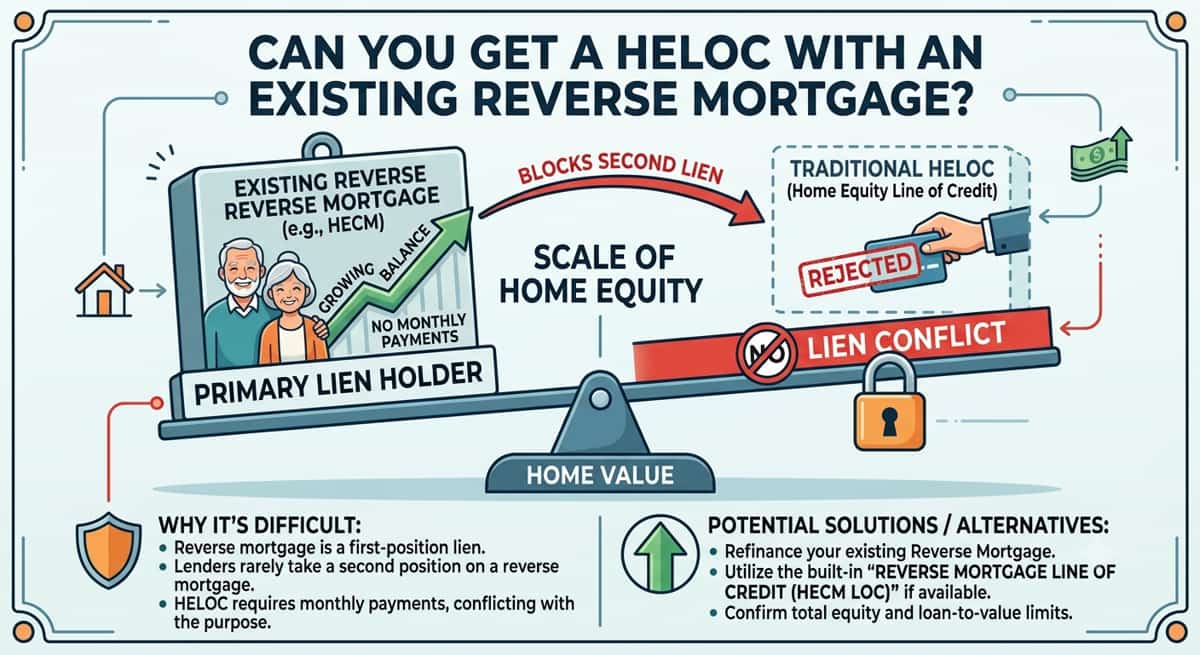
A home equity loan or a home equity line of credit (HELOC) works differently you keep your original mortgage and add a second loan on top of it. The challenge is that far fewer lenders offer second-lien products for manufactured homes, so your options here may be limited depending on where you live and who holds your current loan. If a cash-out refinance is available to you, it's usually the more straightforward path.
Loan-to-Value (LTV) Limits Specific to Manufactured Homes
Loan-to-value, or LTV, is the amount you're borrowing compared to your home's appraised value. Manufactured homes often come with lower maximum LTV limits than site-built homes, meaning lenders may only let you borrow up to 65-80% of your home's value, depending on the loan type, rather than the 80-95% you might see with a traditional house. This isn't a reflection of your creditworthiness it's simply how lenders manage risk on this type of property. It does mean you may need more equity built up before a cash-out refinance makes sense for you.
Common Challenges When Refinancing a Manufactured Home
Even when you qualify, a few common hurdles tend to show up during the process. Knowing about them ahead of time can save you a lot of stress.
Land Ownership vs. Leased Land Issues
If you own the land under your home, you're in a stronger position for most refinance programs. If you're leasing the land common in manufactured home communities your options narrow significantly, since most conventional and government-backed loans require you to own the land. Some lenders do offer specialized loans for leased-land situations, but you'll want to confirm this early, before you get too far into the process.
Age and Foundation Requirements
Homes built before June 1976 typically can't be refinanced through standard programs because they predate the HUD Code. Beyond age, your home also needs to sit on an approved permanent foundation that meets your lender's engineering standards. If your home was moved after its original installation, or the foundation hasn't been inspected and certified, this can delay or derail your application until it's addressed.
Appraisal Difficulties and Limited Comparable Sales
Appraisers need to compare your home to similar recent sales in your area to determine its value. In many areas, there simply aren't many manufactured home sales to compare against, especially newer, higher-quality models like MH Advantage or CHOICEHome homes. This can sometimes lead to a lower-than-expected appraisal, which affects how much you can borrow. Working with an appraiser experienced in manufactured homes can make a real difference here.
Title Conversion from Personal to Real Property
As mentioned earlier, converting your title from personal property to real property is often required before you can access the best refinance options. This process varies by state and can take anywhere from a few weeks to a couple of months, so it's worth starting early rather than waiting until you're ready to apply.
Step-by-Step: How to Prepare to Refinance Your Manufactured Home
Check your title status. Contact your state's housing or motor vehicle department to find out whether your home is titled as real property or personal property.
Confirm your foundation is permanent and certified. If you're not sure, an engineer or your local building department can verify this for you.
Review your credit and debt-to-income ratio (DTI). Most lenders will want to see a clear picture of your monthly debts compared to your income before approving a refinance.
Gather your documents. This typically includes proof of income, your current mortgage statement, homeowner's insurance information, and land ownership documents if applicable.
Compare lenders who specialize in manufactured homes. Not every lender offers the same programs, so getting a few quotes can help you find the best rate and terms for your specific situation.
When Refinancing Might Not Make Sense
Refinancing isn't automatically the right move for everyone, and it's worth being honest about that. If you're planning to sell or move within the next couple of years, the closing costs of a refinance may not have time to pay for themselves through your monthly savings. It's worth calculating your break-even point how many months it will take for your savings to cover the refinance costs before moving forward.
Similarly, if your credit score has dropped since you took out your original loan, you might end up with a similar or even higher rate than what you currently have. In that case, it may be worth waiting a few months and working on your credit before applying.
How a Mortgage Advisor Can Help
Because manufactured home refinancing involves more moving parts title conversion, foundation certification, limited lender optionshaving someone in your corner who understands these details can save you a lot of time and frustration. A mortgage advisor who works specifically with manufactured homeowners can help you figure out which programs you actually qualify for, connect you with lenders who are experienced in this space, and walk you through the paperwork so nothing catches you off guard partway through the process.
Ready to Explore Your Options?
Refinancing a manufactured home comes with a few extra steps, but it's absolutely achievable once you understand the process. Whether you're looking to lower your monthly payment, tap into your home's equity, or simply get a better rate, the right guidance can make all the difference. If you're ready to see what you qualify for, reach out for a personalized consultation it costs nothing to ask, and you'll walk away with a clear picture of your best path forward.