You’ve found the perfect high-value home, and you’re ready to close. But then comes the financing reality: the extended scrutiny and unpredictable deadlines associated with a Jumbo Loan. If you’ve heard the term "Jumbo Loan Wait Time," you know that these non-conforming mortgages, due to their size and complexity, often mean significantly longer underwriting and closing timelines—sometimes delaying your move by weeks or even months.
As an experienced Mortgage Consultant, I specialize in navigating these complex scenarios to ensure my clients secure their financing efficiently. The waiting game doesn't have to be inevitable. There is a powerful, sophisticated strategy that bypasses the burdensome jumbo loan process: Stacking Conforming Mortgages to avoid jumbo status.
This approach involves structuring your financing using two separate, smaller loans that individually meet the strict standards and limits set for conforming mortgages. By strategically "stacking" these loans, we effectively meet the total required amount while sidestepping the time-consuming underwriting review unique to jumbo financing. The result? A simpler, faster path to closing, often getting you into your new high-value property weeks sooner than the traditional jumbo route allows.
Deciphering the Mortgage Market: Conforming vs. Non-Conforming
What is a Conforming Loan?
A Conforming Loan is the bedrock of the U.S. mortgage market. These are home loans that strictly adhere to the standards and requirements set by the two government-sponsored enterprises, Fannie Mae and Freddie Mac. Their primary purpose is to standardize mortgage terms so the loans can be readily purchased and sold on the secondary market, which keeps capital flowing and interest rates competitive.
The most critical benchmark for a conforming loan is the Conforming Loan Limit. If a mortgage amount is at or below this limit, it is eligible for purchase by Fannie or Freddie Mac. It's crucial to understand that this limit is not static; it changes annually and is adjusted regionally by county across the United States to reflect local housing costs. Staying within this limit is the first step toward securing a faster closing.
The Jumbo Loan Hurdle (Non-Conforming)
A loan that exceeds the local Conforming Loan Limit is classified as a Non-Conforming Loan, commonly known as a Jumbo Loan. Because these loans cannot be purchased by Fannie Mae or Freddie Mac, they represent a greater risk to the lender who keeps them on their books as a portfolio loan.
This heightened risk is the direct root cause of the "Jumbo Loan Wait Time." Lenders must conduct significantly more manual and thorough underwriting. They often require more stringent qualifications—such as higher credit scores, lower Debt-to-Income (DTI) ratios, and larger financial reserves—and the review process takes longer because it lacks the automated, standardized guidelines of conforming loans. This increased scrutiny ensures the lender is protected, but it inevitably slows down your closing timeline.
High-Balance Conforming Loans (A Key Distinction)
When discussing large loan amounts, it’s important to distinguish between a Jumbo Loan and a High-Balance Conforming Loan. In certain designated high-cost housing areas (like many metropolitan areas in California or the Northeast), federal regulators permit a higher Conforming Loan Limit. A High-Balance Conforming Loan is a standard conforming product, but with a maximum loan amount that sits between the standard national conforming limit and the threshold for a true jumbo loan. While they are slightly more complex than standard conforming loans, they still fall under the umbrella of Fannie/Freddie guidelines, making them generally easier and faster to underwrite than a true Jumbo Loan.
What is "Stacking Conforming Mortgages"? A Detailed Breakdown
The strategy of stacking conforming mortgages to avoid jumbo loan status is not simply about splitting a big loan into two; it's a precise financial engineering technique that leverages standard market liquidity for efficiency and speed. This method is often referred to as a "piggyback mortgage" and is a specialty solution for high-value home buyers.
The "Piggyback Mortgage" Structure
This strategy relies on the strategic use of two separate loan products closed simultaneously. The classic structure often follows ratios like 80/10/10 or 80/15/5. These figures refer to the percentage of the property value covered by the First Mortgage, the Second Mortgage, and the required Down Payment, respectively.
- The First Mortgage (The Anchor): This is the primary loan, and the crucial element here is that its loan amount is specifically structured to be at or below the maximum Conforming Loan Limit for your county. By ensuring this senior lien meets Fannie/Freddie criteria, the entire property debt benefits from the streamlined underwriting process of the conforming market.
- The Second Mortgage (The Stack): This loan "stacks" on top of the first to cover the remaining financing needed. The second mortgage can be a Home Equity Line of Credit (HELOC) or a Fixed-Rate Second Mortgage. Crucially, since the first mortgage satisfies the conforming limit, the combined debt does not automatically trigger the complex underwriting of a jumbo loan.
The Mechanics of Avoiding Jumbo Status
The goal is to finance a high-value property while keeping all individual components streamlined.
Let's look at a clear example (using the 2024 standard national conforming limit of $\$766,550$ for illustration
Component
Calculation
Amount
Status
Purchase Price
$1,200,000
Required Down Payment (10%)
10% of 1.2M$
$120,000
Out-of-Pocket
First Mortgage (80% LTV)
80% of $1.2M
$960,000
Limit Check
vs. $766,550 limit
JUMBO
In the above scenario, the $960,000First Mortgage would be a Jumbo Loan, triggering long waits.
Here is the stacking solution, based on a $766,550 limit:
Component
Calculation
Amount
Status
Purchase Price
$1,200,000
Down Payment (20%)
20% of $1.2M
240,000$
Out-of-Pocket
First Mortgage (The Anchor)
Set to max conforming limit
$766,550
Conforming
Second Mortgage (The Stack)
$1.2M - $240K - 766,550$
$\$193,450$
Second Lien
By implementing this structure, you successfully financed your property by stacking conforming mortgages to avoid jumbo restrictions. Both the $\$766,550$ loan and the $\$193,450$ second lien are processed under simpler, faster underwriting guidelines, eliminating the need for a complex $\$960,000$ Jumbo Loan.
The Time Advantage
The single most compelling reason to use this stacking strategy is the closing speed. A traditional Jumbo Loan often requires additional appraisals, external third-party reviews, and an extensive manual underwriting period that can easily stretch the closing process to 60 days or more. Conversely, by using two standard products—a conforming mortgage and a HELOC or fixed-rate second mortgage—the entire process is more automated and efficient. We typically aim for a closing timeline closer to 30 to 45 days, giving you a significant advantage in competitive housing markets and substantially reducing your anxiety about delayed closings.
Qualification & Complexity: DTI, LTV, and Why Expertise Matters
While the stacking strategy offers a pathway around the jumbo waiting game, it introduces its own set of sophisticated qualification hurdles. Because you are essentially applying for two distinct loans, the underwriting review for a "piggyback" structure is detailed and requires impeccable financial positioning.
Dual Qualification Requirements
The most significant complexity is that the borrower must qualify for two mortgages simultaneously: the first conforming loan and the second lien (HELOC or fixed-rate second). This means the underwriter isn't just reviewing one debt obligation; they are calculating your capacity to handle both payment streams.
This scrutiny centers heavily on your Debt-to-Income (DTI) ratio. When calculating DTI for stacked loans, the lender aggregates the total monthly housing costs for both liens. This includes the Principal, Interest, Taxes, and Insurance (PITI) for the first mortgage, plus the Principal and Interest payment for the second mortgage. Since this total monthly obligation is higher than a single loan payment, your overall DTI ratio is often pushed closer to lender limits, requiring strong income and minimal other consumer debt to comfortably qualify.
Loan-to-Value (LTV) and Combined LTV (CLTV) Ratios
Lenders use strict metrics to evaluate the risk of stacked loans. While the Loan-to-Value (LTV) ratio refers only to the first mortgage, the critical measure here is the Combined Loan-to-Value (CLTV) ratio.
The CLTV is calculated by dividing the sum of both the first and second mortgage balances by the property’s appraised value. Because a second lien represents a greater risk to the lender (it is subordinate to the first mortgage), lenders impose much stricter caps on the maximum allowable CLTV, often requiring the borrower to have more equity or a larger down payment than they might for a traditional Jumbo Loan. Understanding and structuring your deal to meet these specific CLTV ceilings is non-negotiable for a successful closing.
Does Stacking Eliminate Private Mortgage Insurance (PMI)?
One of the secondary benefits often touted for the stacking strategy is the ability to avoid Private Mortgage Insurance (PMI). This is generally true. If the first mortgage is structured so that its loan amount is 80% LTV or less of the home’s value (such as in an 80/10/10 scenario), PMI is typically not required on that first lien. The second loan covers the gap, allowing you to sidestep the mandatory PMI that would be required on a single loan with less than 20% down.1 This cost savings can be substantial, further enhancing the financial appeal of the strategy.
The Expert Edge: Navigating Lender Overlays
It is crucial to understand that not all lenders offer the same stacking programs. While the underlying mortgages may be conforming, each financial institution implements its own internal rules, known as "overlays," regarding minimum credit scores, reserve requirements, and maximum DTI for the secondary lien.
A consultant who specializes in these complex structures possesses the expertise to identify which lenders have the most favorable stacking programs—for example, those that allow for higher combined loan limits or more flexible reserve requirements. Navigating these lender-specific overlays is the Expert Edge that transforms a theoretically possible structure into a successfully closed deal, ensuring you get the fastest timeline and the best available terms.
Stacking Conforming Mortgages in Refinancing & Equity Scenarios
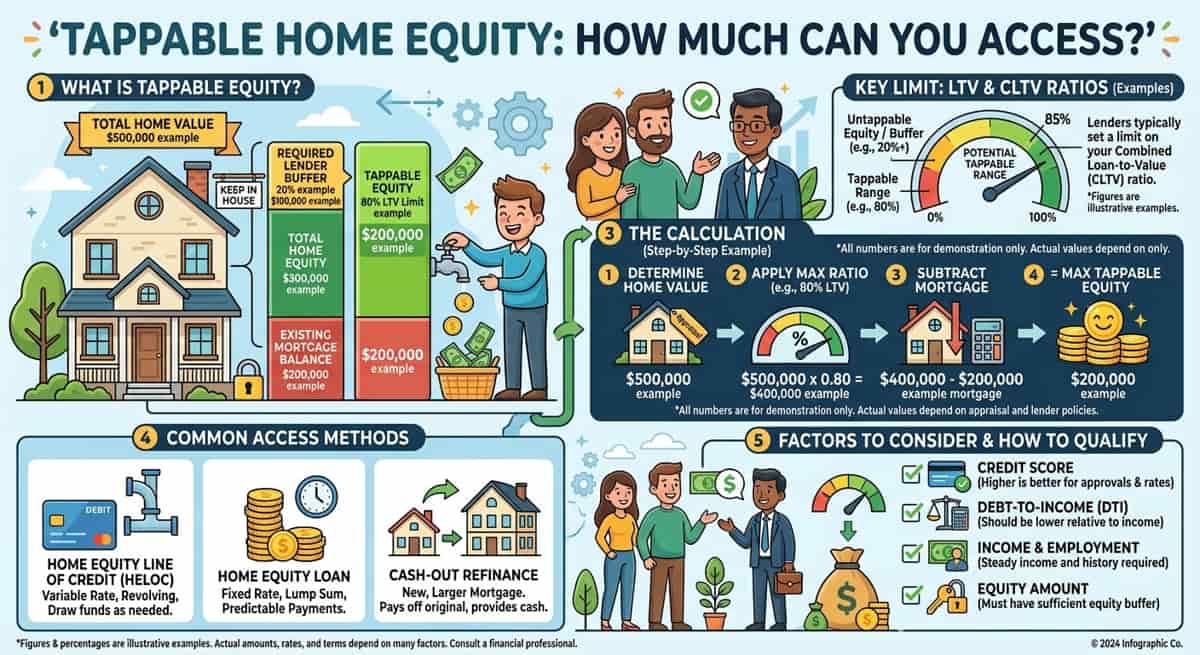
The strategy of stacking mortgages is exceptionally valuable not only for new purchases but also for homeowners seeking to efficiently access equity or secure better rates through refinancing. This is particularly relevant for high-value properties where the equity exceeds the standard conforming limits.
Cash-Out Refinance (The Stacking Application)
For homeowners looking to tap into a substantial amount of their home equity, the traditional Jumbo Cash-Out Refinance is notoriously complex and often subject to highly restrictive Loan-to-Value (LTV) caps. Lenders are often unwilling to lend beyond 70% or 75% LTV on a single jumbo cash-out loan due to the increased risk.
The stacking approach provides a powerful alternative. A borrower can perform a Rate and Term Refinance on the first mortgage, structuring the new loan to be at or below the conforming limit, thereby securing a great primary rate. Simultaneously, they can open a large Home Equity Line of Credit (HELOC) or a fixed-rate second mortgage. This allows the borrower to access significant equity—the "cash-out"—through the second lien, potentially achieving a much higher Combined Loan-to-Value (CLTV) than a single Jumbo cash-out loan would permit, all while maintaining the speed of conforming loan processing.
Rate & Term Refinance Opportunities
If you currently hold a Jumbo Loan, using stacking can be an effective way to improve your financing structure. Many existing Jumbo loan holders find themselves restricted by the complex, time-consuming requirements whenever they wish to refinance.
By splitting the debt into two separate conforming loans, you can execute a Rate & Term Refinance that breaks the jumbo status. This not only often leads to faster processing times and reduced administrative costs for the current refinance but also positions you advantageously for the future. Subsequent refinances of the first, conforming loan will be significantly easier and faster, as the bulk of your debt will reside in the highly liquid conforming market, protecting you from the stringent requirements of Jumbo re-qualification cycles.
The Interest Rate Equation
When evaluating a stacked mortgage structure, transparency regarding rates is essential. It is true that the second mortgage—whether a HELOC or a fixed-rate loan—will almost always carry a higher interest rate than the conforming first mortgage. This is because the second lien is subordinate; in the event of default, the first mortgage lender gets paid first, making the second lien riskier.1
However, the key is to look at the blended interest rate across both loans. When averaged together, the blended rate for the stacked structure is often surprisingly competitive with, and sometimes lower than, the rate offered on a single, high-risk traditional Jumbo Loan. Furthermore, the flexibility offered by a HELOC on the second lien (where you only pay interest on the drawn amount) can provide financial management advantages a single fixed-rate Jumbo cannot.
Closing Costs and Fees
Another common query revolves around the cost of closing two loans. Yes, having two separate loans means you will incur two sets of closing costs, including title work, appraisal fees, and lender costs for both the first and second liens. However, these costs are often offset by the significantly higher origination fees, appraisal requirements, and specialized underwriting charges that are inherently built into the pricing of a single Jumbo Loan due to its elevated risk profile. Your Mortgage Consultant's expertise is vital in running a cost-benefit analysis to ensure the efficiency and speed of stacking outweigh the dual fee structure.
Your Path to a Faster Closing: The Final Checklist
To successfully leverage the stacking strategy and minimize your closing time, thorough preparation is paramount. Speed in underwriting is often determined by the completeness and clarity of the documents you provide upfront.
Prepare Your Documentation
Since you are undergoing dual qualification for two separate loans, the need for flawless documentation is amplified. Any missing or unclear items can immediately stall the process, undermining the time advantage of the stacking method. Gather and organize the following critical documents for both loan applications:
- Income Verification: Complete tax returns (typically the last two years), W-2 forms, and current pay stubs.
- Asset Statements: Comprehensive statements (last two months) for all checking, savings, investment, and retirement accounts. Underwriters need to confirm sufficient cash reserves for both the down payment and future mortgage payments.
- Identification: Government-issued photo ID and Social Security card.
Providing a clean, complete package from day one is the single best action you can take to lock in a fast closing.
Review Loan Scenarios with an Expert
The complexity of two loans requires deep financial modeling. Before committing to the stacked approach, you must review detailed amortization schedules that illustrate the long-term costs of the stacked structure versus a single Jumbo loan. An expert advisor will help you:
- Compare the blended interest rate and total interest paid over the life of the loan.
- Analyze the impact of using a HELOC (variable rate) versus a fixed-rate second mortgage.
- Determine the optimal balance between the two liens to meet your monthly budget and long-term financial goals.
The Power of Pre-Approval
The final, essential step in securing both speed and efficiency is obtaining a robust Pre-Approval for the entire stacked structure. A comprehensive pre-approval from a lender who understands this complex financing sends a powerful signal to sellers that your offer is backed by a fully vetted, executable financing plan. This not only strengthens your bid in a competitive market but effectively locks in the efficiency of the conforming process, paving the way for a smooth, fast closing.
Conclusion: Secure Your High-Value Home Without Delay
The "Jumbo Loan Wait Time" is a costly, stressful hurdle for high-value homeowners, but it is one you can strategically overcome. The technique of stacking conforming mortgages to avoid jumbo status is a sophisticated, highly efficient financial strategy. It allows you to finance your property using established, faster conforming guidelines, bypassing the slow, manual underwriting process inherent in non-conforming loans. The result is a quicker, more predictable closing timeline, giving you confidence and an advantage in the housing market.
However, success with this method relies entirely on precision. Underwriting two concurrent conforming loans, managing CLTV ratios, and navigating lender-specific overlays is a complex task that should not be handled by inexperienced parties. You need a Mortgage Consultant expert who specializes in structuring these multi-loan scenarios to ensure your documentation is perfect and your blended rate is optimized.
Don't let rigid financing timelines dictate your move or your access to equity. If you are pursuing a high-value purchase, cash-out, or refinancing goal, take control of your closing speed.
Contact us today to schedule a free, tailored consultation and structure your financing for speed and success.