
If you earn your living through commissions—be it in sales, real estate, insurance, or another thriving field—you've likely experienced the frustration of applying for a mortgage. The traditional lending world often struggles to understand income that fluctuates, leading many commission-based professionals to mistakenly believe that owning a home or refinancing is out of reach.
This perception is a myth. The reality is that lenders are not looking for consistency in your monthly paychecks; they are looking for stability and predictability over time. Your challenge isn't your income structure, but proving its long-term reliability.
This guide will show you exactly how to transform your seemingly irregular commission earnings into qualified, stable income using precise documentation and the right advisory strategy. Your ability to borrow for home equity or a new purchase rests on how well you can tell your financial story.
The Lender's Perspective: Proving Income Predictability
When you apply for a mortgage, the underwriter’s primary job is risk assessment. From their viewpoint, irregular or commission-based income presents a higher challenge than a standard salary because the money needed to cover the monthly payment isn't guaranteed every period. The lender must ensure your financial commitment is sustainable—a decision that critically impacts your long-term stability and is treated with the utmost seriousness.
For a mortgage, your income is validated and becomes "Qualified Income." This is the specific figure lenders use in the final loan decision. It is not simply your gross earnings; rather, it is the portion of your income the bank can confidently rely on to continue.
Our role as expert advisors is to translate the reality of your commission earnings into a format that meets regulatory standards, ensuring you receive trustworthy, safe advice that prevents financial overextension. The foundational concept is simple: lenders require clear, historical proof of predictability to confirm the continuity of income. This historical data allows them to project your earnings into the future, turning your variable payments into a stable, usable monthly figure.
Step 1: The Golden Rule - Two Years of Continuous and Stable Commission
The absolute foundation for qualifying for a mortgage with commission income is establishing a track record. For nearly all conventional, FHA, and VA loan programs, the Golden Rule requires a minimum of two years of continuous commission income. This duration allows the underwriter to smooth out any seasonality, exceptional bonuses, or temporary market shifts that may have occurred in a shorter period.
"Continuous" means just that—no significant gaps in employment where commission was earned. It also generally requires you to have remained in the same industry where you’ve developed your earning skills. Switching careers entirely resets this clock, as your established earning history is no longer considered reliable in the new field.
Calculating 'Stable' Income: The Average Method
Lenders determine your official "Qualified Monthly Income" by using a straightforward averaging method. The formula applied is:
Qualified Monthly Income} =Total Gross Commission Income Over 24 Months /24
This calculated figure is the maximum amount the lender can use in your Debt-to-Income (DTI) ratio. Critically, lenders are looking for income that is stable or increasing. If your commission income shows a significant, documented decline from the first year to the second, an underwriter may be forced to use the lower average, or in severe cases, require further justification or deny the income entirely. Consistency matters more than extreme highs.
What If I Have Less Than Two Years? Exceptions and Co-Borrowers
While the two-year rule is standard, limited exceptions exist. For instance, if you transitioned from a salaried role to a commission role within the same company and industry and can demonstrate equivalent earnings, a lender may, in some cases, accept 12-18 months of history. However, this is rare and program-dependent. A far more effective strategy if you are short on income history is to apply with a qualifying co-borrower who has traditional, stable income, which can significantly bolster your application.
Continuity of Income: Proving Your Future Earnings Potential
Proving past earnings is only half the battle; the lender must also be confident that your income will continue into the future. This is established through the Verification of Employment (VOE) document. The employer must confirm that you are currently employed and, most importantly, that the commission-based pay structure is likely to continue for at least the next three years. If you are self-employed and commission-based (such as a Realtor), this continuity is proven through your license status and the long-term viability of your business. This documentation ensures the lender that the source of your funds is stable enough to cover a 30-year mortgage commitment.
Step 2: Critical Documentation Requirements for Commission Earners
The key to a smooth underwriting process for commission-based income lies entirely in the quality and completeness of your documentation. The underwriter uses these "entities" to meticulously verify the stability and amount of your Qualified Income. Preparing these documents in advance with your advisor is essential for success.
The Role of W-2s and Pay Stubs
You will need to provide W-2 forms for the full two-year historical period used for averaging. Additionally, your most recent pay stubs are required. These stubs are not just for showing your current pay period; they are crucial for displaying your Year-to-Date (YTD) earnings. The underwriter will compare your current YTD income against the income earned during the same period last year. A significant shortfall in YTD earnings compared to the prior year can trigger a decline in your Qualified Income, even if your two-year average is strong.
Detailed Tax Returns (Form 1040 and Schedules)
Your full, signed federal tax returns (Form 1040) for the two most recent years are mandatory. This is often the most scrutinized document. Lenders prefer tax returns because the figures are government-verified and auditable, making them the most reliable source of truth.
If you are an independent contractor or receive a 1099, you will also have a Schedule C filed with your tax returns. This is where income is often reduced by business expenses (mileage, supplies, home office, etc.). It is vital to understand that the lender must use your Net Income after these deductions. While deductions are excellent for tax purposes, they unfortunately reduce your qualified income for a mortgage, even if your cash flow (net take-home) feels higher.
Employer Verification of Employment (VOE) and Commission Structure Letters
The Verification of Employment (VOE) is a crucial document completed directly by your employer. It confirms your start date, job title, and the historical income amounts. However, for commission earners, the underwriter requires two additional details:
- Commission Structure Detail: The employer must explicitly describe how your commission is earned (e.g., "10% of gross sales," "paid monthly/quarterly"). This detail allows the underwriter to understand the sustainability of the income.
- Continuity Confirmation: A formal letter or notation on the VOE confirming that you are currently employed and that your existing commission structure is ongoing. This assurance is the final step in bridging your past earnings history with your future ability to repay the loan, satisfying the lender's need for income predictability.
Navigating Loan Program Specifics (Conventional vs. FHA vs. VA)
Understanding how each major loan program treats commission income is critical, as a slight difference in guidelines can be the factor that determines your eligibility. As an expert advisor, we tailor the loan program to fit your specific income profile, not the other way around.
Conventional Loans and Commission Income Guidelines
Conventional loans, backed by Fannie Mae and Freddie Mac, adhere strictly to the two-year history rule. For commission earners, they require clear documentation showing that the income is likely to continue. Generally, conventional guidelines are the least flexible when dealing with significant year-over-year income declines. If your income has been stable or increasing over the past 24 months, a conventional loan often provides the most advantageous rates and terms, especially for applicants seeking higher loan amounts or needing to avoid mortgage insurance with a 20% down payment.
FHA Loans: Flexibility and Commission Rules
FHA loans, insured by the Federal Housing Administration, are often perceived as more flexible. While they still require the same two-year history and the averaging formula, FHA guidelines can sometimes be more forgiving of minor income fluctuations or recent employment transitions within the same field. FHA places a heavy emphasis on the employer’s written verification of future continuity. If your commission income has been slightly decreasing, or if you have a limited employment history that falls just shy of the two-year mark (e.g., you moved from a related salaried job), FHA is often the best path forward. However, this flexibility comes with required mortgage insurance (MIP).
VA Loans: Favorable Rules for Veterans
For eligible veterans and active-duty service members, VA loans offer incredible benefits, including no down payment. The VA loan program treats commission income similarly to the others, requiring two years of documentation to prove its stability. The key difference is the VA's focus on residual income and a more holistic view of the borrower's overall financial health. While the VA has generally favorable terms, it remains strict on income stability and the proof of future continuity. You must still demonstrate that your commission earnings are reliable and sustainable to take advantage of these significant benefits.
Optimizing Your Finances Before You Apply (Pre-Approval Strategy)
The pre-approval phase is the most critical time for commission earners. Thoughtful preparation can dramatically improve your loan amount, terms, and the ease of the underwriting process. Taking these steps ensures you present the strongest possible financial profile to the lender.
Managing Business Expenses and the DTI Ratio
If you are a 1099 contractor or self-employed with significant commission income, your primary goal in the 12 to 24 months leading up to your mortgage application should be to minimize business deductions that lower your taxable income. While maximizing deductions is excellent for tax season, it directly works against your mortgage qualification. Since lenders use your Net Income (the income remaining after deductions) to qualify you, every dollar you deduct on a Schedule C or similar form reduces your Qualified Income.
This Qualified Income is then plugged into the Debt-to-Income (DTI) ratio, which is the total of your minimum monthly debt payments divided by your Qualified Monthly Income. Lenders have strict DTI limits. By maximizing your taxable income (and therefore your Qualified Income), you lower your DTI ratio, significantly increasing your borrowing capacity.
The Importance of Clean Bank Statements
For the two months leading up to and during your application, underwriters will meticulously review all pages of your bank statements. They are specifically looking for two things: the source of your down payment funds and the absence of "non-sourced" or "cash in transit" deposits. A non-sourced deposit is any large sum of money that cannot be clearly traced back to a verified account or income source (e.g., cash deposits, checks from undocumented sources).
These large, unexplainable deposits are treated suspiciously because they could indicate an undisclosed loan, which would impact your DTI ratio. To avoid delays or scrutiny, all large deposits—typically defined as anything greater than 1% of the loan amount—must be sourced and documented. Keep your bank activity transparent by using clear transfers and avoiding cash deposits when preparing for your mortgage application.
Why a Commission-Specialized Mortgage Advisor is Non-Negotiable
The greatest mistake a commission earner can make is approaching a generalist loan officer who primarily handles salaried borrowers. These lenders may not understand how to properly calculate your Qualified Income, leading to mistakes in structuring your file or, worse, an unnecessary denial. A commission-specialized mortgage advisor is a crucial partner because they possess the expertise to navigate the nuances of underwriting manuals, using specific precedents and guidelines to turn complex income into a successful approval. They know the workarounds, which documentation to emphasize, and which programs offer the most favorable treatment for your unique earnings pattern.
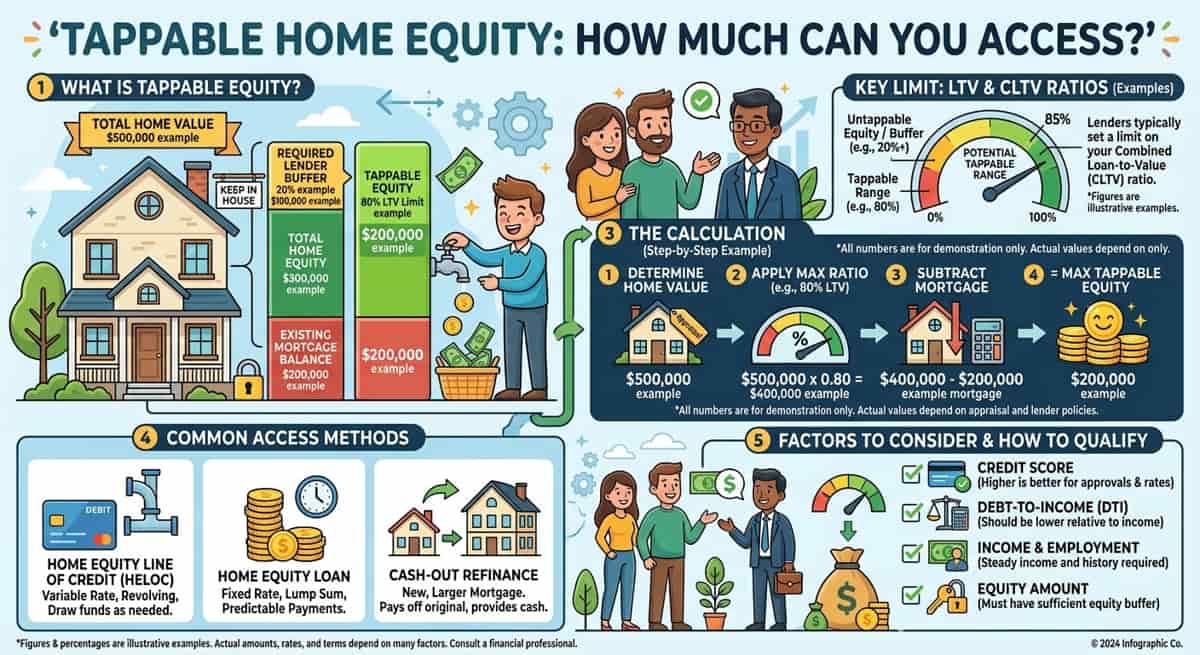
Home Equity and Refinancing for Commission Earners: A Unique Path
For homeowners, commission income presents a unique hurdle when seeking to leverage their property's value through refinancing or home equity products.
- Rate-and-Term Refinancing: If you are simply reducing your interest rate or changing the loan term, the income requirements are often the same as a purchase: proving two years of stable, continuous commission.
- Cash-Out Refinancing: This is subject to higher scrutiny. Because you are converting home equity into cash, lenders view this as a higher risk. You must demonstrate exceptional income stability to qualify, as the lender is relying on your commission income to repay a larger loan balance.
- Home Equity Lines of Credit (HELOCs): HELOCs are attractive for their flexibility, but proof of income stability is the primary challenge. Lenders must be assured you have the ongoing capacity to manage potential draws against the line, making the two-year averaging and future continuity letters absolutely critical for approval.
The Final Check: What to Ask Your Advisor
Before committing to a mortgage professional, you must verify their expertise with commission-based files. Use these pointed questions to assess their specialization:
- "Based on my documentation, what is the largest percentage decrease in Year-to-Date income versus last year that your lender will accept?" (A specialist will know the specific guidelines, which are often strict.)
- "Can you walk me through a recent case study where you successfully helped a client with 1099 commission income secure a refinance or HELOC?" (A specialist can provide tangible examples of their success.)
- "How does your underwriter treat commissions that are paid quarterly versus monthly?" (This tests their familiarity with how income frequency impacts the calculation of your average monthly income.)
- "If my income falls just short of the two-year rule, what specific documentation or exceptions can you use to bridge the gap?" (A generalist may simply say "no," while an expert will have program-specific solutions.)
Conclusion: Your Stable Future Starts Now
Securing a mortgage or refinancing with commission income is entirely possible when stability is proven through meticulous planning and documentation. By adhering to the two-year rule and optimizing your financial profile, you transform irregularity into reliable Qualified Income. Don't let the commission myth limit your financial goals. Partner with a specialist advisor today to confidently step toward leveraging your home equity or purchasing your next property.