
You found the house. Maybe it's the one you've been picturing for years: a good neighborhood, the right layout, space for the family. The asking price is $1.2 million, and when you call your lender, they say something you weren't expecting: "That's going to be a jumbo loan."
Suddenly the excitement gets tangled up with questions. Is that bad? Does that mean I won't qualify? What's different?
I hear some version of this conversation at least a few times a month. As a licensed Mortgage Loan Officer who works with homebuyers on high-value purchases and refinances, I want to be straightforward with you: a jumbo loan isn't something to be afraid of. It's just a larger mortgage one that falls outside the standard loan programs backed by Fannie Mae and Freddie Mac. Because of that, lenders hold these loans in their own portfolios and set their own standards. The bar is higher, but for buyers who understand what's expected, it's very manageable.
By the time you finish reading this guide, you'll know exactly what lenders look for in 2026, your credit score, down payment, income documentation, cash reserves, and more so you can walk into the process with confidence instead of questions.
What Is a Jumbo Loan - and Who Needs One?
A jumbo loan is a mortgage that exceeds the conforming loan limit set each year by the Federal Housing Finance Agency (FHFA). In 2026, that limit is $806,500 for most U.S. counties. Any mortgage above that amount is a jumbo loan and it comes with its own set of qualification rules.
That one difference the lender can't offload the loan is the reason jumbo mortgages come with stricter requirements. The bank or credit union carries 100% of the exposure. If a borrower defaults on a $1.5 million loan, there's no government-backed safety net. Lenders want to be very sure the borrower is financially solid before they commit.
Who typically needs a jumbo loan
Buyers in high-cost metro areas places like New York, Los Angeles, San Francisco, Miami, and Seattle where median home prices regularly exceed the conforming limit. Buyers in luxury or move-up markets elsewhere. And buyers who simply have larger financing needs because they've chosen a higher-value property.
Here's something worth saying clearly: needing a jumbo loan doesn't mean you're overextending yourself. It means you're purchasing at a price point that requires a larger mortgage than the standard programs cover. Plenty of financially strong borrowers use jumbo loans every year. The qualification process is just more thorough.
Because jumbo loans aren't backed by Fannie Mae or Freddie Mac, lenders set their own requirements. That's why you may hear different standards from different lenders and why shopping around matters more than it does with conventional loans.
The 2026 Conforming Loan Limit - Where Does "Jumbo" Actually Begin?
For 2026, the FHFA baseline conforming loan limit for a single-family home is $806,500 in most U.S. counties. Any mortgage above that amount regardless of who the borrower is or what the property looks like is classified as a jumbo loan.
That said, the story is a bit different if you're buying in a high-cost area. In counties where home prices are significantly above the national average parts of California, New York, New Jersey, Hawaii, Alaska, and others the FHFA sets higher limits. In the most expensive markets, that ceiling reaches $1,209,750 for a single-family home before a loan crosses into jumbo territory.
The FHFA recalculates these limits each year based on national home price changes. When home values rise, the limits generally go up which is why the threshold has increased considerably over the past several years.
Here's a practical example: if you're buying a $900,000 home in a standard-cost county and putting 10% down, your loan amount is $810,000. That's $3,500 above the conforming limit and yes, that makes it a jumbo loan.
For buyers purchasing multi-unit properties, the limits are higher:
Property Type | 2026 Standard County Limit | High-Cost Area Limit |
1-Unit (Single Family) | $806,500 | Up to $1,209,750 |
2-Unit | $1,032,650 | Up to $1,548,975 |
3-Unit | $1,248,150 | Up to $1,872,225 |
4-Unit | $1,551,250 | Up to $2,326,875 |
Note: Always verify current limits with your loan officer or directly at FHFA.gov before making decisions, as limits can be updated.
If you're not sure whether your county is a standard or high-cost area, your lender can look it up in about 30 seconds.
Jumbo Loan Credit Score Requirements
Credit score is the first thing I look at when reviewing a jumbo loan application not because it tells the whole story, but because it tells me a lot about how a borrower has managed financial obligations over time. On a loan this size, that track record matters.
Here's the general landscape for 2026:
760 and above: Best rates, widest choice of lenders, smoothest approval process
720–759: Standard approval territory, competitive rates, solid options
700–719: Approval is possible, but fewer lenders and slightly higher rates
Below 700: Options narrow significantly; some portfolio lenders will work with you, but expect tighter terms
Most jumbo lenders set their floor at 700–720. To access the most competitive rate pricing, 740 is typically where you want to be. Some lenders reserve their best tier for borrowers at 760 or above.
Why is the bar higher than a conventional loan? Because the lender is holding the entire loan balance on their books. On a $1.3 million mortgage, the stakes are considerably higher than on a $300,000 one. A stronger credit profile gives the lender confidence that you'll manage this payment the way you've managed everything else.
If your score is around 680, don't assume the door is completely closed. Some portfolio lenders, typically smaller banks and credit unions that specialize in high-value lending, have more flexibility. But you'll likely need to compensate with a larger down payment, stronger reserves, or both. Your interest rate will also be higher.
One practical step that many buyers skip: check all three credit bureaus before you apply. Equifax, Experian, and TransUnion can each show slightly different scores. Lenders use the middle of the three, so an error on one bureau, even a small one could be pulling your qualifying score down unnecessarily. Pull your reports early and dispute anything inaccurate.
Also worth noting: recent credit events carry more weight on jumbo applications than on conventional ones. A late payment from six months ago, an outstanding collection, or a recent hard inquiry from a car loan can raise questions that lenders take more seriously at this loan size.
Down Payment Requirements for a Jumbo Loan
One of the most common questions: how much do I actually need to put down?
The short answer is 10% to 20%, depending on the loan amount and the lender. But it's worth understanding how that plays out at different price points.
For loan amounts up to around $1.5 million, many lenders will approve 10% down for a well-qualified borrower. Once you move into the $1.5M to $2.5M range, most lenders want to see 15–20%. Above $2.5 million, expect 20–25% or more to be the norm.
Here's why the percentages climb as loan sizes grow: unlike conventional loans, jumbo mortgages don't typically offer private mortgage insurance (PMI). With a conventional loan, a buyer who puts down 5% can pay PMI as a risk offset for the lender. Jumbo lenders generally don't offer that option so they compensate by requiring more equity upfront.
A real example: I recently worked with a couple buying a $1.4 million home outside Denver. They had 12% down about $168,000. Their lender approved it, but also required substantial cash reserves on top of the down payment. The down payment got them in the door; the reserves sealed the deal.
A few things to know about where your down payment comes from:
Gift funds are restricted. On conventional loans, gifts from family members are relatively common and easy to document. On most jumbo loans, lenders require that all down payment funds be the borrower's own seasoned assets meaning they've been sitting in your account long enough to be verified. Check with your specific lender on their gift fund policy.
Large deposits get scrutinized. Lenders will ask for 60–90 days of bank statements. Any large deposit that doesn't match your regular income pattern will need to be explained and sourced. Moving money between accounts, selling assets, or receiving funds from family shortly before closing creates paperwork at best and complications at worst. Plan ahead.
Worth keeping in mind: Budget not just for the down payment, but for 6–12 months of cash reserves on top of it. Both are required. More on reserves shortly.
Debt-to-Income Ratio (DTI) for Jumbo Loans
Your debt-to-income ratio is how lenders measure whether your income is strong enough to support your monthly obligations including the new mortgage. It's expressed as a percentage.
There are two versions: front-end DTI (just housing costs divided by gross monthly income) and back-end DTI (all monthly debt obligations divided by gross monthly income). Jumbo lenders focus almost entirely on the back-end ratio.
The standard maximum for most jumbo lenders is 43% on the back end. Many prefer to see 38–40% for the cleanest approvals. Some lenders will stretch to 45–50% if everything else about the file is very strong: excellent credit, large reserves, low LTV but that's the exception, not the rule.
A simple way to think about it: if your gross household income is $20,000 per month, a 43% DTI means your total monthly debt obligations mortgage payment, property taxes, insurance, car loans, student loans, credit card minimums, and any other recurring debt need to stay at or under $8,600.
The reason DTI matters even more on jumbo loans than conventional ones is straightforward: the mortgage payment itself is larger. A $1.2 million loan at current rates could carry a principal and interest payment above $7,000 per month. If you already have a car payment, student loans, and other obligations, that payment alone can consume most of your allowable DTI before you even factor in taxes and insurance.
If your DTI is running high, a few things can help: paying down existing debt before applying, increasing your down payment to reduce the loan amount, or demonstrating compensating factors like 12+ months of reserves, a very low loan-to-value ratio, or a credit score well above the minimum.
Income Verification and Employment Requirements
Income documentation is where jumbo loans part ways most sharply from the conventional process. Lenders want to see not just that you earn enough, but that your income is stable, consistent, and verifiable.
If you're a W-2 employee, the documentation is relatively straightforward:
Two years of W-2s
Two years of federal tax returns
30 days of recent pay stubs
Verification of employment (sometimes requested directly from your employer)
If you earn bonuses or commissions: those are typically averaged over 24 months and only counted if they appear consistently in your history
If you're self-employed, the process is more involved and this is where many business owners get surprised:
Two years of personal and business federal tax returns
A year-to-date profit and loss statement (many lenders require this to be CPA-prepared)
12–24 months of business bank statements at some lenders
Your income is calculated from your net income after deductions not your gross revenue
That last point is critical. I've worked with business owners who gross $600,000 or more annually but qualify for far less on a jumbo application because aggressive write-offs reduce their documented net income substantially. If you're self-employed and planning a high-value purchase, have a conversation with both your accountant and your loan officer before tax season. There are strategies that can help balance tax efficiency with mortgage qualification.
A declining income trend can also be a problem, even if the total amounts are strong. If your income was $350,000 two years ago and $280,000 last year, lenders will want to understand why and may use the lower figure for qualifying purposes.
Bank statement programs are worth knowing about if you're self-employed with significant deductions. Some lenders offer an alternative qualification method using 12 or 24 months of bank deposit history to calculate income, rather than tax returns. These programs typically carry a slightly higher interest rate, but they can open doors that standard documentation won't.
Borrower Type | Key Documents | How Income Is Calculated |
W-2 Employee | W-2s, pay stubs, tax returns | Gross income |
Self-Employed | Tax returns, P&L, bank statements | Net income after deductions |
Bank Statement Program | 12–24 months of statements | Average monthly deposits |
Cash Reserves - The Requirement Most Buyers Don't Expect
If there's one jumbo loan requirement that catches buyers off guard, it's this one.
After your down payment and closing costs, lenders want to see that you still have a meaningful amount of money left accessible, liquid, and documented. These are called cash reserves, and they're measured in months of your total housing payment.
Your total housing payment, often called PITI, includes principal, interest, property taxes, and insurance. Some lenders also factor in HOA dues.
The typical reserve requirement is 6 to 18 months of PITI, depending on loan size, lender, and the strength of your overall file.
Here's what that means in real numbers: if your monthly mortgage payment including taxes and insurance comes to $7,500, a lender requiring 12 months of reserves wants to see at least $90,000 remaining in your accounts after closing. Not before or after. That's on top of your down payment and closing costs. For many buyers, this is a number they simply haven't planned for.
What counts toward reserves:
Checking and savings accounts
Money market accounts
Investment and brokerage accounts
Vested 401(k) and IRA balances, typically at 60–70% of their value
What generally doesn't count:
Unvested stock options or restricted stock units
Real estate equity (unless you're selling and can document proceeds)
Business accounts (unless you're self-employed and it's clearly accessible)
If you own other properties with mortgages, those payments factor into the reserve calculation too meaning the requirement can be higher. Two properties, two mortgage payments, more months of reserves needed.
The best approach is to know this number before you start shopping. Run the math early and make sure your accounts reflect what lenders will want to see.
Jumbo Loan Interest Rates - What to Expect in 2026
There's a common assumption that jumbo loans always carry higher rates than conventional mortgages. Historically that was true but the picture has shifted noticeably over the past several years.
Today, jumbo borrowers with strong profiles often see rates that are comparable to or even slightly below conventional 30-year rates. The reason: lenders have come to recognize that jumbo borrowers as a group tend to have excellent credit, substantial assets, and low default rates. That lower risk can translate into more competitive pricing.
That said, your actual rate depends on a number of things specific to your file:
Credit score tier: A 780 score gets meaningfully better pricing than a 710
Loan-to-value ratio: More equity (larger down payment) typically means a better rate
Loan size: Very large jumbo loans (sometimes called "super jumbo" above $2.5M–$3M) often carry higher rates
Loan term and structure: 15-year fixed, 30-year fixed, and adjustable-rate mortgages all price differently
Lender type: Portfolio banks and credit unions sometimes price jumbo loans more aggressively than big national banks
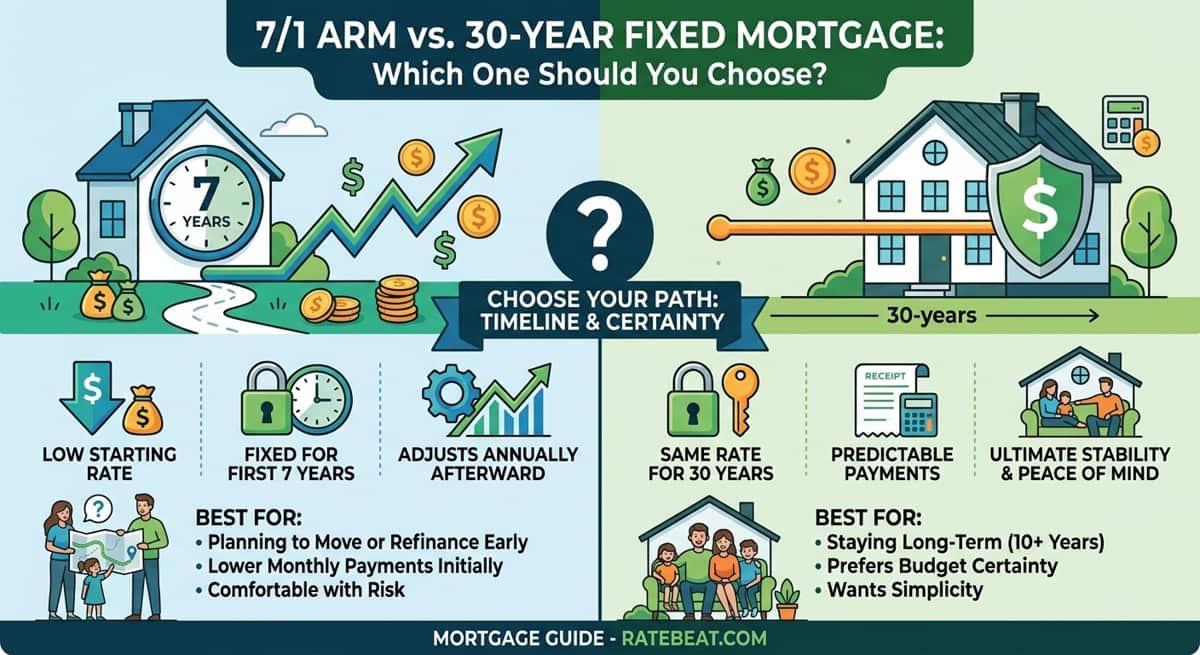
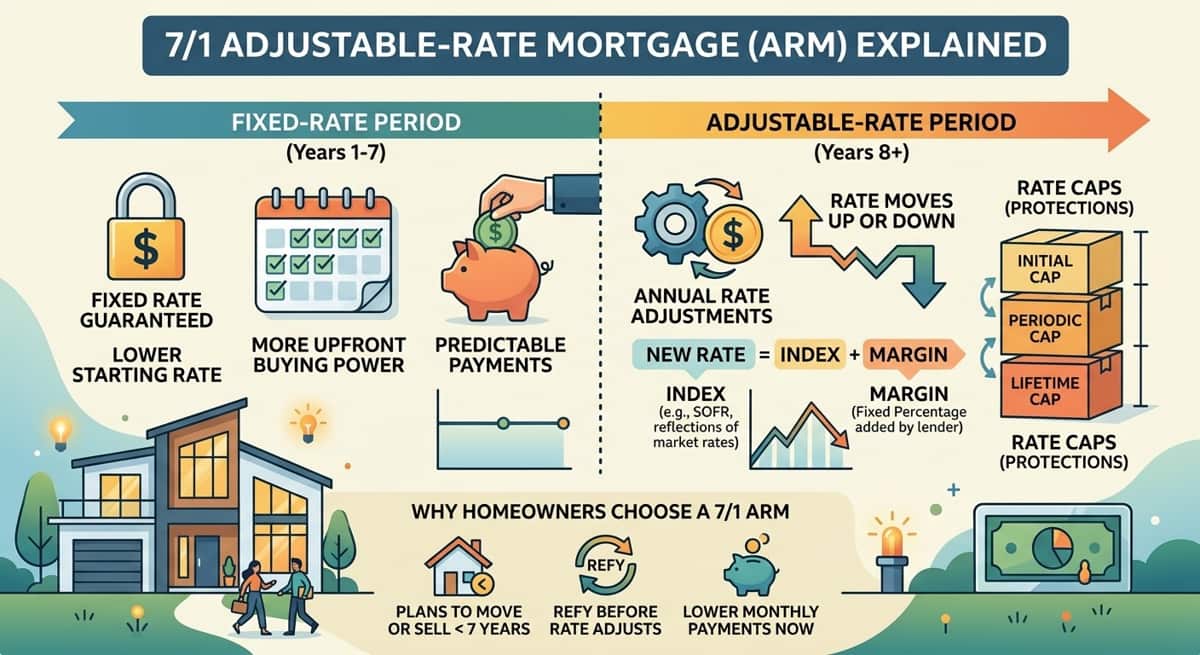
On the topic of adjustable-rate mortgages: ARMs are more common in the jumbo space than in conventional lending, and for good reason. A 7/1 or 10/1 ARM gives a high-value buyer a fixed rate for the first 7 or 10 years, often at a lower starting rate than a 30-year fixed. For buyers who plan to sell or refinance within that window, an ARM can offer real savings on a large balance.
One thing I always tell clients: don't assume your current bank is offering the best jumbo rate. Shopping 3–4 lenders including community banks, credit unions, and portfolio lenders who specialize in high-value mortgages can make a difference that's worth thousands of dollars over time. On a $1.5 million loan, even a quarter of a point in rate is significant.
Rate perspective for 2026: Jumbo mortgage rates for well-qualified borrowers are often in the same range as or slightly below conventional 30-year rates. The gap narrows or widens based on your credit score, down payment, and which lender you're working with. Get multiple quotes before committing.
Property and Appraisal Requirements for Jumbo Loans
The property itself matters as much as the borrower on a jumbo loan. Lenders are making a large, long-term bet on the value of that home so they look carefully.
Jumbo loans are available for primary residences, second homes, and investment properties. But requirements become more stringent as you move away from a primary residence. Non-owner-occupied properties typically require a larger down payment, higher credit scores, and more reserves.
Appraisals are where things get notably different. Most jumbo lenders require two independent appraisals for loans above certain thresholds commonly $1.5 million, though some lenders start requiring a second appraisal at $1 million. On a $2 million purchase, the appraisal is the lender's primary protection against overpaying for collateral. If the two appraisals come in differently, the lower value typically governs which can affect how much the lender will finance.
For buyers, this means having a realistic picture of market value before making an offer. An appraisal gap on a jumbo purchase is harder to bridge than on a conventional one.
Certain property types face additional scrutiny or may be ineligible:
Condos in buildings with high investor concentration or litigation history
Rural properties on large acreage that are difficult to appraise comparably
Unique constructions dome homes, log cabins, earth-sheltered structures where comparable sales are limited
Properties with commercial zoning or mixed-use designations
Some lenders also restrict jumbo lending geographically, focusing only on specific states or metropolitan areas. If you're buying in a rural or less-liquid market, it's worth confirming lender availability early.
For new construction, expect to provide builder contracts, draw schedules, and sometimes evidence of construction progress before the loan closes.
Jumbo Loan Refinancing - Can You Refinance Above the Conforming Limit?
If you already have a jumbo mortgage and the rate environment, your financial situation, or your goals have shifted, refinancing is absolutely on the table. The qualification standards are essentially the same as a purchase loan: credit score, income documentation, reserves, and a fresh appraisal.
There are two types of jumbo refinances worth understanding:
Rate-and-term refinance: You're changing your interest rate, your loan term, or both without pulling out additional cash. This is the most straightforward option and typically allows the highest loan-to-value ratio, up to around 80%.
Cash-out refinance: You're borrowing more than you owe and taking the difference as cash often to fund home improvements, consolidate debt, or make an investment. Cash-out jumbo refis are available, but lenders cap the loan-to-value ratio more conservatively, typically at 70–75%. Most also require that you've held the loan for at least 6–12 months before pulling cash out.
A client of mine came to me after the adjustable-rate period expired on her $1.8 million mortgage. The rate had jumped, and her payment climbed by more than $900 a month. We refinanced into a new 10/1 ARM at a meaningfully lower rate. The process required the same documentation as her original purchase income verification, reserves, and a new appraisal but it was well worth the effort. She recovered the closing costs in under a year.
One note: a small number of portfolio lenders offer streamlined refinance options for existing jumbo customers, with reduced documentation requirements. These aren't widely available, but if you financed through a community bank or credit union, it's worth asking whether they have a program like this.
How to Strengthen Your Jumbo Loan Application Before You Apply
The buyers who move through the jumbo process smoothly are almost never the ones with the highest incomes. They're the ones who come in prepared. Here's what I walk clients through when we're planning ahead for a high-value purchase:
1. Check your credit early at all three bureaus. Pull your Equifax, Experian, and TransUnion reports 90 days before you plan to apply. Dispute any errors. Pay down revolving balances to below 30% of available credit. Avoid opening new credit accounts or co-signing anything in the months before applying. Each of these steps can meaningfully move your middle score.
2. Run your own DTI numbers before a lender does. Add up every recurring monthly debt obligation. Then calculate what a mortgage payment at your target purchase price would look like principal, interest, estimated taxes, and insurance. Divide the total by your gross monthly income. If you're above 43%, figure out what you can pay down or restructure before you apply.
3. Organize your income documentation now. Two years of federal tax returns both personal and business if self-employed. W-2s. Thirty days of pay stubs. Year-to-date P&L if applicable. Having these ready in a folder before your first lender call signals that you're a serious buyer and speeds up the pre-approval process considerably.
4. Build reserves beyond the minimum. Lenders notice. A borrower with 18 months of reserves after closing looks meaningfully different than one with the 6-month minimum. Stronger reserves can unlock better pricing, more lender options, and more flexibility on other parts of the file.
5. Avoid large financial moves while in process. Don't change jobs. Don't make large undocumented deposits. Don't close old credit accounts. Don't finance a car. Once you're in the middle of a jumbo application, financial stability on paper is exactly what lenders want to see.
6. Shop multiple lenders. Jumbo underwriting varies significantly from one institution to the next. A lender who declines your file may be applying stricter internal guidelines than the market overall. Include at least one community bank, one credit union, and one mortgage company in your comparison.
7. Work with someone who knows jumbo loans specifically. This isn't the place for a generalist. The nuances around reserves, self-employed income, appraisal requirements, and ARM structures are specific to the jumbo market. An experienced jumbo loan officer will catch issues before they become problems.
The borrowers I see close smoothly don't always have perfect files but they know their numbers, they have their documents in order, and they understand what the lender is looking for. That preparation makes the entire process faster and less stressful.
Jumbo Loan vs. Conventional Loan - Side-by-Side
Feature | Conventional Loan | Jumbo Loan |
Loan Limit | Up to $806,500 (2026, standard) | Above $806,500 |
Backed By | Fannie Mae / Freddie Mac | Lender's own portfolio |
Minimum Credit Score | 620 (FHA: 580) | 700–720 typically |
Down Payment | 3–5% (with PMI) | 10–20%+ |
DTI Maximum | Up to 50% with AUS approval | 43–45% typical |
PMI Available | Yes | Rarely |
Income Documentation | Standard | More thorough |
Appraisals Required | 1 | 1–2 depending on loan size |
Cash Reserves | Often 2–3 months | 6–18 months typical |
The core takeaway: jumbo loans require more of everything: more documentation, more down payment, more reserves, stronger credit. But the lending standards exist because the loan amounts are genuinely larger and the lender is carrying that risk directly. For a buyer who meets the criteria, the process is very doable. It just requires more planning than a standard purchase.
You're More Ready Than You Think - Let's Talk Through the Numbers
Jumbo loans have a reputation for being complicated. In reality, they're just larger mortgages with more thorough requirements. The buyers who struggle aren't usually the ones who are truly unqualified; they're the ones who weren't told what to expect.
Now you know. Credit score in the 720–760+ range. Down payment of 10–20% or more. DTI at or below 43%. Income documented cleanly over two years. And cash reserves well beyond what most first-time buyers have seen on a loan application.
Buying a home at this price point is a significant milestone. You deserve clear guidance, not a generic checklist, and not a lender who treats your file like a formality. If you're wondering where you stand right now, I'm glad to walk through your situation with you. No pressure, no obligations, just a clear picture of where you are and what, if anything, needs to be in place before you move forward.
Reach out when you're ready. That first conversation usually takes about 20 minutes, and most clients leave it feeling better informed than when they started.